






|
Эти аяты из Корана заставили меня принять ислам (видео)
|
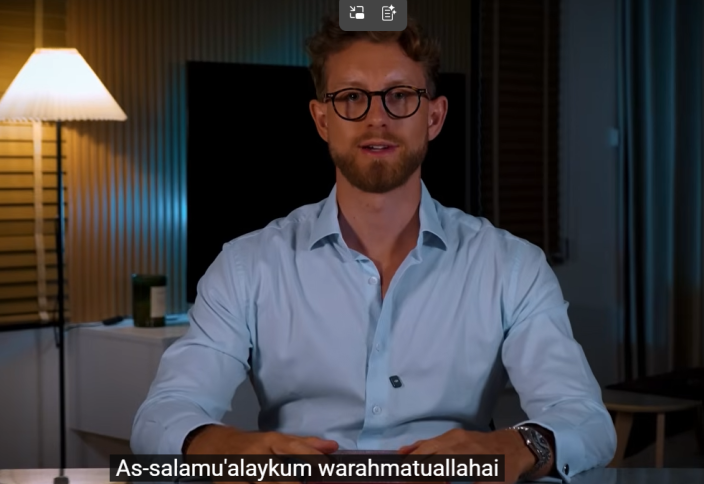
Иногда человек открывает Коран в поисках ответов. Иногда они открывают её просто чтобы понять, во что верят мусульмане. И иногда, неожиданно, они сталкиваются с вопросами о жизни, смерти, цели, морали и Боге.
Для одного недавнего обращённого в ислам этот путь начался без какого-либо намерения стать мусульманином.
Он вырос христианином, посещал церковь в детстве, а позже отошёл от религии, сосредоточившись на бизнесе и предпринимательстве. Со временем его понимание ислама также формировалось негативным опытом с людьми, которые идентифицировали себя как мусульмане, но, по его мнению, не отражали учения Корана.
Это начало меняться после того, как он переехал на Ближний Восток и встретил мусульман, чьи характеры и поведение создали совершенно иное впечатление об исламе.
В конце концов, в период, когда ему предстояли важные решения в жизни, он начал искать ответы. После того как он попросил у ChatGPT несколько коранических аятов, он сказал, что эти аяты неожиданно ответили на многие вопросы, с которыми он боролся.
Этот опыт подтолкнул его купить Коран в Бангкоке и начать читать.
В итоге он провёл 19 дней, интенсивно читая её. Достигнув примерно 240 страниц, он сказал, что что-то изменилось.
«Это тот Бог, которому я всегда молился. Это религия, в которую я верю.»
Затем он принял шахаду и принял ислам.
Но что именно он нашёл на первых 240 страницах?
Когда Коран бросает вызов тому, кого мы считаем мудрым
Одним из аятов, который сразу запомнился ему, был Коран 2:13, где описываются люди, высмеивающие верующих как глупых, но при этом не осознавающие собственного невежества.
Для него этот стих оспаривает современное предположение: что религиозная вера неизбежно является признаком невежества или отвержения разума и науки.
Он размышлял о том, как легко люди доверяют знаменитостям, инфлюенсерам, бизнес-лидерам и общественным деятелям.
Однако ни один из них не может ответить на главные вопросы человечества просто через свой мирский успех: Почему мы здесь? Что происходит после смерти? Какова высшая цель существования?
Этот стих заставил его пересмотреть, кого мы выбираем считать мудрым — и почему.
Адам, Сатана и разница между грехом и высокомерием
История Адама и Иблиса также глубоко повлияла на его понимание ислама.
До чтения Корана он воспринимал борьбу добра и зла почти как битву двух противоборствующих сил — Бога с одной стороны и Сатаны с другой.
Коранический рассказ представлял нечто иное.
Иблис был создан Аллахом, но стал мятежником из-за высокомерия. Когда ему велели поклониться Адаму, он отказался и оправдал своё неповиновение.
Адам, тем временем, тоже совершил ошибку. Но Адам ответил иначе: он признал свою ошибку, обратился к Аллаху и попросил прощения.
Для обращённого это открыло важное различие.
Вопрос не только в том, совершает ли человек ошибку. Люди способны на грех. Главное — что они делают потом.
Становятся ли они высокомерными, оправдывают свои проступки и продолжают их продолжать?
Или признают свою ошибку, раскаются и возвращаются к Аллаху?
Эта история стала уроком смирения, покаяния и личной ответственности.
Этот мир — не конечный пункт
Ещё одна сильная тема взята из Корана 2:38-39, где человечеству говорят, что те, кто следует Аллаху, не будут испытывать страха и горя, а те, кто отвергает Его знаменения, несут последствия.
Для него эти стихи помогли ответить на один из самых важных жизненных вопросов: почему мы здесь?
Коран изображает земную жизнь как временную, а не как конечную цель.
Этот взгляд изменил его понимание страданий, успеха и даже смерти.
Если эта жизнь временна, а загробная жизнь вечна, то мирские обстоятельства не могут быть всей историей.
Коран неоднократно направляет верующегося за пределы непосредственного момента и к ответственности перед Аллахом.
«Не смешивай правду с ложью»
Коран 2:42 также оспаривал его прежний подход к религии:
«Не смешивай правду с ложью и не скрывай правду сознательно.»
До того как стать мусульманином, он создал собственную систему верований. Он брал идеи из христианства, других религий и собственный опыт и комбинировал их так, как казалось ему разумным.
Чтение Корана заставило его пересмотреть этот подход.
Если откровение действительно исходит от Бога, рассуждал он, то его нельзя просто изменить в соответствии с личными предпочтениями.
Вопрос не в том, «Какие части мне нравятся?», а в том, «Что на самом деле правда?»
Это отличие стало важным на его пути к исламу.
За кем мы следим?
Ещё одним отрывком, который привлёк его внимание, был Коран 2:166-167, описывающий День Суда, когда те, за кем следовали, дистанцируются от тех, кто следовал за ними.
The message he took from these verses was one of personal responsibility.
In everyday life, people are constantly influenced by others-leaders, celebrities, influencers, friends, institutions and public figures.
But influence does not remove responsibility.
Someone cannot simply say, "I did it because somebody told me to."
The Qur'anic message places responsibility on the individual to distinguish between truth and falsehood and to choose whom-and what-to follow.
For him, this lesson extended beyond people.
Money, status, fame, ego and worldly success can also become things that people unconsciously follow and prioritise above everything else.
The Qur'an and Our Perception of Time
One of the stories that particularly affected his understanding of the Hereafter is found in Qur'an 2:259.
The Qur'an describes a man whom Allah caused to die for one hundred years and then brought back to life. When asked how long he had remained, the man believed it had been only a day or part of a day.
The convert connected this story with a question he had struggled with before accepting Islam.
If someone dies and the Day of Judgment comes thousands of years later, what would that experience feel like?
He had previously struggled to understand the concept of waiting such an enormous amount of time after death.
The Qur'anic account caused him to reconsider human perceptions of time.
Our experience of time is not necessarily equivalent to the passage of time itself. Just as someone can sleep for hours and wake feeling as though only minutes have passed, the Qur'an presents examples that challenge our assumptions about how time is experienced.
For him, this helped make the concept of resurrection and the Hereafter more understandable.
When Poverty Becomes a Test
Qur'an 2:268 describes another struggle familiar to many people:
Satan threatens you with poverty and encourages immoral behaviour, while Allah promises forgiveness and bounty.
The verse resonated with his experiences in business and everyday life.
Fear of poverty can push people toward decisions they know are wrong.
A person may think:
"If I don't take this shortcut, I might lose money."
"If I don't compromise my principles, I might fail."
"If I don't do this, I might become poor."
The Qur'an challenges that fear by directing believers to trust Allah rather than allowing fear of financial loss to become an excuse for wrongdoing.
Why Do Bad People Sometimes Get Away With Evil?
One of humanity's oldest questions is: Why doesn't God immediately punish people who do evil?
The convert said this had been a question for him before embracing Islam.
Qur'an 3:178 offers one part of the Qur'anic answer: the delay granted to those who reject Allah should not be mistaken for their ultimate escape from accountability.
Justice does not always happen immediately.
A person may commit wrongdoing and appear to prosper. Another person may suffer despite doing what is right.
From a purely worldly perspective, this can seem unfair.
But Islam places justice within the larger framework of the Hereafter.
This life is not the final courtroom.
The absence of immediate punishment does not mean the absence of judgment.
"Every Soul Will Taste Death"
Qur'an 3:185 became another important part of his understanding:
"Every soul will taste death."
The verse continues by reminding humanity that true success is ultimately measured by being saved from the Fire and admitted into Paradise.
For him, this changed the way he viewed worldly life.
Islam does not teach that everything in this world is meaningless. Muslims are permitted to enjoy lawful blessings, build businesses, earn wealth, have families and enjoy the good things Allah has provided.
But none of those things should become the ultimate purpose of existence.
The world is temporary.
The Hereafter is permanent.
That distinction became central to his new understanding of life.
The Oneness of God
Perhaps unsurprisingly, the Qur'anic teaching about Allah's absolute oneness was among the ideas that resonated most strongly with his previous beliefs.
Qur'an 4:171 calls Jesus, or Isa (peace be upon him), the Messiah and messenger of Allah while warning against exaggerating religious claims and affirming that Allah is One.
Having grown up Christian, he said that the concept of the Trinity had never fully made sense to him.
He had always found himself praying to one God.
The Qur'anic description of Jesus as a messenger of God therefore resonated with the understanding he had already been developing.
Islam did not require him to reject Jesus.
Instead, it presented Jesus as one of a long line of prophets who called humanity to worship the One God.
Gratitude for What Allah Has Given Us
Another theme he found meaningful was the Qur'an's criticism of associating partners with Allah.
His reflection was simple:
If Allah is the ultimate source of our provision-our health, time, food, wealth and life-why should worship or ultimate gratitude be directed toward anything else?
This also changed how he viewed prayer and charity.
Prayer becomes more than a ritual. It becomes an acknowledgement of dependence upon the Creator.
Zakat becomes more than giving money away. It becomes recognition that what we possess is ultimately a trust from Allah.
Faith Is Meant to Produce Action
The final verse he discussed was Qur'an 7:56, which warns against spreading corruption on Earth and reminds believers that Allah's mercy is close to those who do good.
That final idea captured something important about his journey.
Faith, he realised, is not merely about saying, "I believe."
It is supposed to transform how a person lives.
Belief should produce action.
It should influence how we treat people, how we earn money, how we respond to mistakes, how we handle hardship and how we use the blessings Allah has given us.
Islam is not simply an idea to accept intellectually. It is a way of life to practise.
A Journey That Began Without Intending to Convert
Perhaps the most striking part of this story is that the man did not begin reading the Qur'an because he wanted to become Muslim.
He began because he wanted to understand.
He carried misconceptions about Islam. He had questions about God, morality, death and the purpose of life. He had even constructed his own personal belief system.
But as he read, certain verses challenged assumptions he had carried for years.
After reading around 240 pages, he reached a conclusion that changed the direction of his life.
He recognised in the Qur'an the conception of God he had been searching for.
His journey is a reminder that people can approach the Qur'an from very different starting points. Some come with faith. Others come with doubts. Some come with curiosity. Others come with misconceptions.
But the invitation remains the same: read, reflect and seek the truth sincerely.
For this new Muslim, the Qur'an was not simply a book he finished reading.
It became the book that changed how he understood God, himself, this world and what comes after it.
And that, for him, was the beginning of a completely new life.
https://youtu.be/8nEu3zrdYMM
Topics: Iman (Faith And Belief)