







|
Zimbabwe’s costly currency woes
|
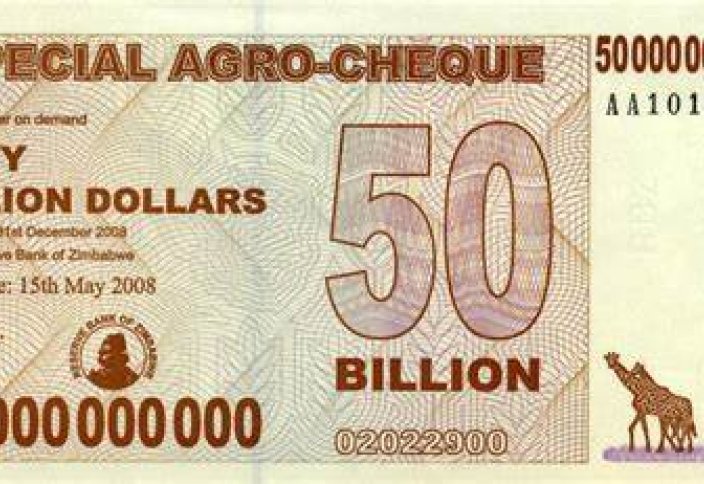
Zimbabwe has lost a staggering $4.5 billion in three years because of its unending currency problems and distorted monetary policies, a new World Bank report says. The revelation came at a time its public debt has been ballooning.
The southern African country has largely relied on the US dollar since it suffered a bout of record hyperinflation in 2009, which forced it to abandon its own currency.
At the peak of the currency crisis under the rule of the late Robert Mugabe, Zimbabwe’s monthly inflation rate was estimated at over 80 billion percent according to International Monetary Fund (IMF) figures.
The Zimbabwe dollar was printed in denominations of up to 100 trillion before it was finally mothballed 16 years ago.
Since then the country has made six attempts to revive its currency with the latest being in April last year when it introduced the Zimbabwe Gold (ZiG), which is backed by 2.5 tonnes of gold and some foreign currency reserves worth about $285 million.
Read: Why Zimbabwe’s ZiG is tankingThe ZiG has already lost nearly 50 percent of its value before its first anniversary despite tight controls by the monetary authorities to protect the new currency.
A raft of measures have been introduced to support the ZiG, including forcing companies to price their products in local currency and this has favoured the informal sector that sells goods at the higher parallel market exchange rate.
Several companies have been forced to close down or relocate to other countries because of the currency chaos.
The World Bank in its latest Zimbabwe Public Finance Review (PFR) report released this week said the currency chaos had cost the country 2.5 percent of its gross domestic product between 2020 and 2023.
Inflation-related tax losses pegged at $1.4 billion represented the biggest loss during the period under review followed by losses attributed to informalisation of the economy ($1.2 billion) and foregone customs duty ($580 million).“In the absence of such distortions, tax revenue in 2023 could have been as high as 18.9 percent of GDP compared to the 14.6 percent of GDP that was observed,” reads part of the report.“Tax revenue can be increased in a way that improves both efficiency and pro-poor outcomes.”The Bretton Woods institution recommended that Zimbabwe must reform its taxation system to curb some of the leakages.“To increase tax revenue, Zimbabwe’s 2024 budget announced various reforms to broaden the tax base, including removing some Value Added Tax (VAT) exemptions,” the report added.“While these reforms can lead to revenue gains, they also hurt poor households.“Compensatory mechanism can restore the impact of VAT reforms on poor households, potentially at a fraction of the new VAT collections.”Read: Debt talks falter as Zimbabwe loans grow 1.7pcThe report noted that Zimbabwe could also clear its $21 billion debt, which has made it difficult for the country to access loans from international capital markets for over 20 years if it adopts fiscal reforms.“By adopting a bold set of fiscal reforms, it can turn the page of a prolonged history of macroeconomic instability, and set the foundation for a credible national budget that is efficient, able to manage unforeseen fiscal risks and can ensure a stable and competitive currency,” the World Bank added.“In turn, this would open up the historic possibility of arrears’ clearance and their resolution would release major additional resources in concessional multilateral financing for public and private investments.”Zimbabwe has been struggling to access foreign loans after its defaulted on debt from lenders such as the World Bank, IMF, African Development Bank (AfDB) and the Paris Club.
Its biggest Paris Club creditors are Germany, France, United Kingdom, Japan and the US with a combined external debt stock amounting to $2.9 billion.
President Emmerson Mnangagwa’s government, three years ago, enlisted the help of AfDB president Akinwumi Adesina and former Mozambican President Joachim Chisano to negotiate with creditors.
It has also started paying former farmers that were dispossessed of their properties during the controversial land reforms spearheaded by Mr Mugabe’s regime.
Finance minister Mthuli Ncube early in February said at least $21 million out of $146 million owed to owners of seized farms that were under Bilateral Investment Protection Agreements (BIPPAS) will be paid this year. The balance will be covered over the next four years.
Farms that were covered under BIPPAS were owned by nationals from Denmark, Germany, the Netherlands, Switzerland and the former Yugoslavia.
In 2019, Zimbabwe agreed to pay $3.5 billion in compensation to local white farmers who lost their land during the land reforms. Foreign white farmers were allowed to apply to get their seized properties back.
Some of the recommendations by the World Bank in the PFR report included removing monetary and exchange-rate distortions to enable low and stable inflation, reducing civil servants wage bill by eliminating duplicate and redundant roles as well as doing away with VAT exemptions and zero-rating to increase revenues.
The World Bank also urged Zimbabwe to reverse the informalisation of its economy by removing the high compliance burden for small businesses and taxing formal transactions.
According to the World Bank, Zimbabwe has one of the largest informal economies in the world, with a significant portion of the country’s workforce employed in informal activities like street vending, small-scale manufacturing and unregistered businesses.
The rapid rise of the informal economy has been blamed on the currency problems and isolation of the country by the international community. It is estimated that over 80 percent of Zimbabweans are employed in the informal sector.
The government struggles to collect taxes from informal businesses, but of late the authorities have been introducing various measures to try and increase the tax base. Provided by SyndiGate Media Inc.
The East African