



|
Заседание рабочей группы по границам в этом месяце после шестилетнего перерыва
|
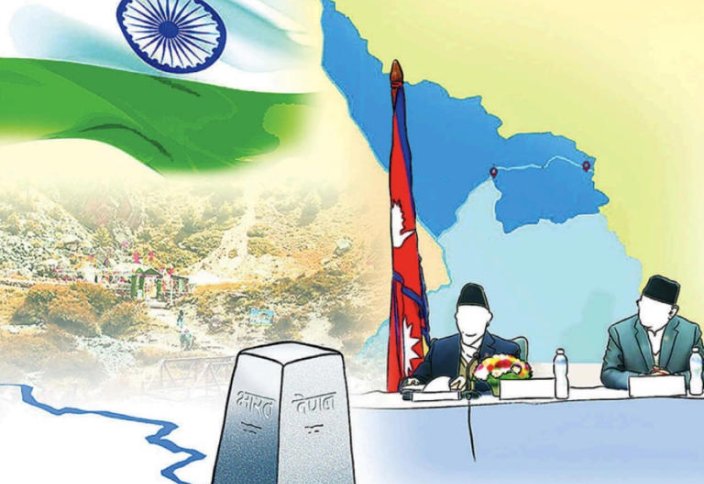
В качестве важного шага на пути к возобновлению переговоров о границах Индия предложила даты следующего заседания Рабочей группы по границам (BWG) - двустороннего механизма самого высокого уровня, которому поручено провести полевые работы вдоль границы между Непалом и Индией.
Это включает в себя строительство, восстановление и ремонт пограничных столбов, расчистку нейтральной полосы и другие технические работы, но за исключением спорных районов Суста и Калапани. Ожидается, что встреча состоится в конце этого месяца.
На последней встрече BWG в Дехрадуне, Индия, с 28 по 30 августа 2019 года, обе стороны договорились завершить оставшуюся задачу в приграничных районах к концу 2022 года. Однако из-за продолжающейся пандемии Covid дальнейших встреч быть не могло.
Последующая встреча была отложена из-за пандемии и последующего пограничного спора между двумя странами. BWG была создана в 2014 году во время визита премьер-министра Индии Нарендры Моди в Непал и совместно учреждена обоими правительствами для выполнения технических работ на границе.
Возобновление заседания BWG было ключевым пунктом повестки дня, на котором непальская сторона настаивала в каждом визите и встрече высокого уровня с момента окончания пандемии.
По словам двух чиновников в Министерстве иностранных дел и Департаменте обзора, Индия предложила две возможные даты следующей встречи в июле: одна во вторую неделю июля, а другая в конце месяца. Однако непальская сторона пока не получила официальной повестки дня от Индии. "Как только мы получим официальную повестку дня, мы направим свое согласие на встречу", - сообщил представитель внешнеполитического ведомства.
После пандемии Непал неоднократно призывал к возобновлению заседаний BWG, но Индия поначалу не хотела этого делать. Напряженность обострилась после того, как 2 ноября 2019 года Индия опубликовала новую политическую карту, что побудило министерство иностранных дел Непала подтвердить, что Калапани, Липулек и Лимпиядхура являются неотъемлемыми частями Непала.
В заявлении от 6 ноября 2019 года подчеркивается, что подобные вопросы должны решаться на основе взаимного консенсуса и что односторонние действия неприемлемы для Непала. За этим последовало несколько дипломатических переписок, и этот вопрос поднимался во время визитов высокого уровня из Непала.
The Nepal-India Joint Technical Committee, formed in 1981, made significant progress in scientifically mapping the Nepal-India border. In 2007, the committee produced 182 sheets of boundary maps using GPS, excluding the disputed areas of Susta in Nawalparasi West and Kalapani in Darchula. After its mandate ended in 2007, the BWG was established in 2014 to take over technical responsibilities.
According to officials, both sides are expected to resume fieldwork across the border and complete unfinished tasks from before 2019. Over the past six years, the Armed Police Force of Nepal and India's Sashastra Seema Bal have carried out temporary maintenance of boundary pillars. However, such work falls under the formal mandate of the BWG.
The BWG had divided its technical mandate as D1, D2, D3 and D4. As per the mandate, the boundary inspection and joint field work fall under the category of D1. Likewise, maintenance and repair of the boundary pillars and erecting new ones fall under D2.
The cross border inventory that is mandated to dig out the properties held by the citizens of the both sides in each other's territory fall under D3, and observation of boundary, boundary pillars and erecting new ones with the help of global positioning system or GPS fall under the category of D4.
There are documented cases of Nepali nationals cultivating land on the Indian side and Indian nationals occupying and cultivating land within Nepali territory.
Data from Nepal's Department of Survey shows that 8,554 boundary pillars have been installed along the border. Of these, 1,325 are missing and 1,956 are either partially or fully damaged. Under the BWG, two supporting mechanisms-the Survey Officials' Committee and Joint Field Survey Teams-provide technical inputs and are mobilised on the ground.
Before the pandemic, both sides had formed joint teams to carry out tasks such as constructing and repairing boundary pillars, preparing inventories of encroachments, and conducting GPS-based observations.
Currently, some of these responsibilities are being handled by the Armed Police Force of Nepal and India's Sashastra Seema Bal, which, according to a foreign ministry official, are not the right agencies for these technical duties.
"In order to resume the BWG meeting, we had sent several diplomatic notes to India, but there was no response," the official told the Post on condition of anonymity. He suggested India's reluctance may have stemmed from the map dispute that began in November 2019.
In addition to diplomatic notes, successive foreign ministers, including the incumbent Arzu Rana Deuba, urged India to resume the BWG meetings at the earliest. The most recent Nepal-India Joint Commission meeting at foreign minister's level, held in Kathmandu in January 2024, had also decided to reconvene the BWG.
The BWG is co-led by the Director General of Nepal's Department of Survey and the Surveyor General of India. So far, six BWG meetings have been held. In 2017, both sides finalised a comprehensive plan and timeline to complete boundary work within five years.
Kathmandu Post (EKantipur.com)