







|
В Англии третий год подряд растет число людей, ночующих на улице
|
Число людей, ночующих на улице, в Англии выросло на пятую часть за год, согласно новым оценкам.
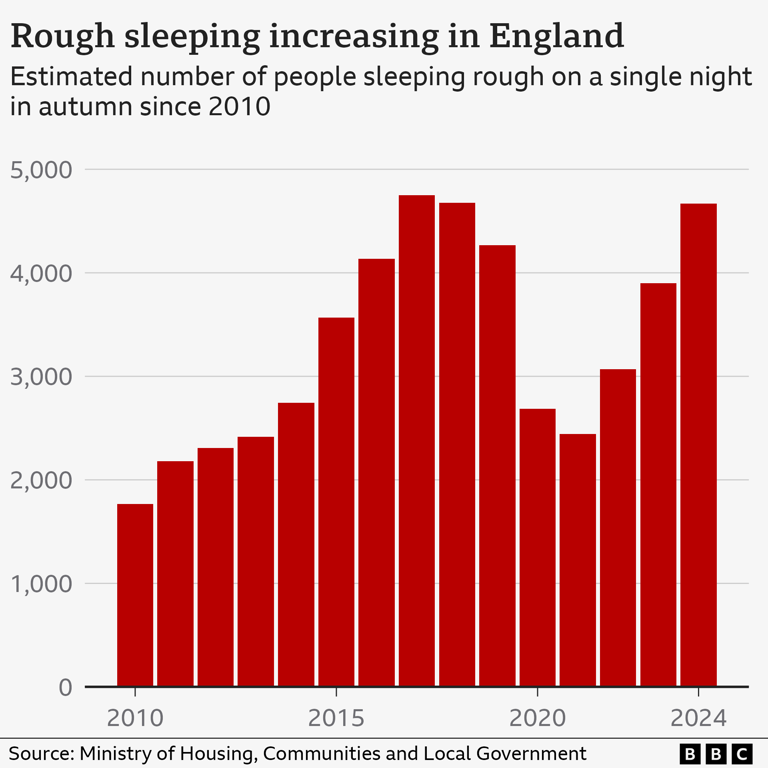
Согласно официальной статистике, прошлой осенью на улицах спали 4 667 человек, что является почти рекордным показателем и третьим годовым ростом подряд.
В то время как в Лондоне по-прежнему самое большое количество людей, ночующих на улице, эта проблема растет быстрее в остальной части Англии, показывают данные Министерства жилищного строительства.
Правительство заявляет, что унаследовало «острый и укоренившийся жилищный кризис».
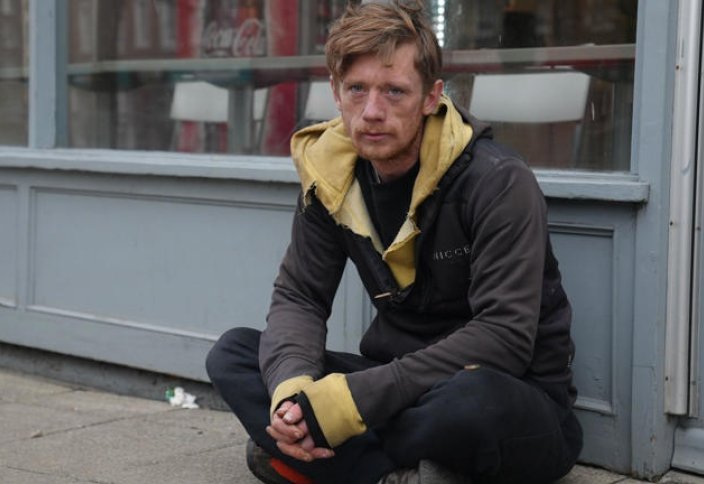
В течение двух лет Алекс ночует на улице в городке Уисбек в графстве Кембриджшир.
«Меня выгнала моя мама. У нее был дом с тремя спальнями, но моим брату и сестре исполнилось 16 лет, и дом разделился, и я проиграл», — говорит он.
На востоке Англии количество бездомных выросло на 22%, и Алекс описывает бездомность в Уисбеке как «социальную эпидемию».
«Это было самое страшное время в моей жизни»
Истинные масштабы бездомности в сельских городках, таких как Уисбек, часто занижаются, люди ночуют в полях, сараях, на кладбищах и на спортивных площадках.
Rough sleepers here are at the mercy of the extreme hot and cold weather and vulnerable to assault, while there are often fewer services available to help them.
Agriculture is one of the main industries here, but the work is often low paid and seasonal, meaning it is easy for people to miss mortgage or rental payments and become homeless.
"One of the main factors is having enough income to privately rent. Landlords like to see a contract with 40 hours [a week] on it so they know they are going to get their income," explains John Heathorn, an outreach worker at local homelessness charity the Ferry Project.
His charity currently houses more than 40 vulnerable people, and has a substantial waiting list.

John himself slept in a local cemetery for more than a year after struggling to find regular employment.
"It was one of the most terrifying and humiliating times of my life. I lost all [my] self-respect, self-esteem. There were times where I didn't know if I would wake in the morning, where I didn't know if I wanted to," he says.
"It really upsets me people are still sleeping rough today, I know what comes with it. I've had a lot of trauma in my life but nothing compares to being homeless, the not knowing, one day rolling into the next."
«Было холодно, я не мог спать»

The Ferry Project has seen the demographic of its homeless clients change notably since the Brexit vote and its aftermath.
While they were once 70% eastern European, they are now approximately 70% British.
One of their current clients, roofer David, had been sleeping in a shed for six months after breaching the terms of his tenancy agreement.
"I had a duvet and I was lying on concrete. It was freezing, I couldn't sleep, I just had to walk around, I was getting about two hours [sleep] a night if that. I hit the drink, and it took everything away from me," he says.
According to the official snapshot data, the number of rough sleepers hailing from the UK rose by almost a quarter last year, compared with a 7% rise in people from the EU.
Every English region saw an increase in rough sleeping, apart from the North West, where the numbers fell very slightly.
Yorkshire and the Humber had the biggest percentage rise of 43%, while the East and West Midlands both saw a rise of more than a third.
Rough sleeping has risen by 164% since the snapshot was introduced in 2010 and is 2% below its 2017 peak.
«Разрушительное воздействие» жилищного кризиса
Separate data published on Thursday showed the number of families living in temporary accommodation has reached a new high.
Between July and September, 126,040 households were living in places like hotels, bed and breakfasts and flats – an increase of 15.7% on the same period in 2023.
The total included almost 165,000 children, also a record high.
"Today's statistics lay bare the devastating impact of the acute and entrenched housing crisis we have inherited - rough sleeping soaring, a record number of children growing up in temporary accommodation, and a broken housing system," the minister for homelessness, Rushanara Ali, said.
The government said it had recently doubled its emergency homelessness funding to £60m, alongside £1bn already allocated to tackle the root causes of the issue.