


|
Текстильная промышленность Турции в кризисе
|
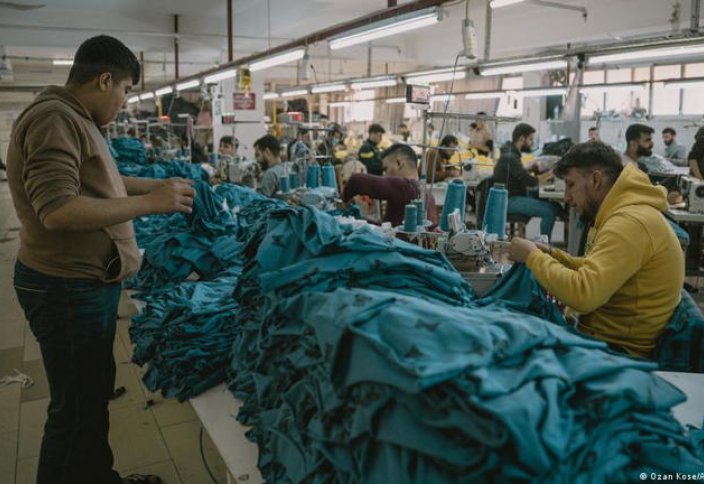
Закрытые фабрики и потеря рабочих мест: текстильная промышленность Турции борется за жизнь. Экспорт сокращается, поскольку Китай и Бангладеш захватывают рынки ЕС. Пострадавшие говорят, что у них мало надежды на будущее.
В центральном анатолийском турецком городе Токат зимний день ужасно холодный. Термометр показывает -3 градуса Цельсия (27 градусов по Фаренгейту).
Сундуз Аккан, мать троих детей, наряджается и отправляется на фабрику Сик Макас, где работала до октября.
Примерно 1 700 сотрудников завода перестали получать зарплату в середине 2025 года. 7 октября рабочие объявили забастовку. Но это привело к шоку, а не к разрешению: уже на следующий день 1000 сотрудников Sik Makas получили текстовые сообщения о их увольнении.
Sunduz Akkan and her colleagues have been protesting at the gates of their former employer ever since. In a solidarity tent at the site, they attempt to draw attention to their precarious situation.
Their tenacity has paid off in part. In January, they finally received their back pay.
Moreover, they have won the right to corrections that remove the remark "Code 22" as the reason for their termination in work records.
Code 22 stands for "other reasons," and employees fired under this code are ineligible to receive unemployment or severance pay. Now, the dreaded distinction has been wiped away thanks to pressure from protesters.
But the fight goes on: Ex-employees are still fighting for their severance pay.
"I worked here for over three years," says Akkan. "Now we're being treated like beggars, even though we're just asking for what we're entitled to."

Давление на работу в нестабильных условиях труда
Buse Kara, the group's spokesperson, was one of those fired in October. Shortly after than, she was put under investigation for allegedly insulting Turkish President Recep Tayyip Erdogan.
After 16 days under house arrest, she is now once again at the protest's front line.
When describing the company, Kara speaks of a climate of workplace harassment and intense pressure to increase productivity. Recently, the company decided to limit toilet breaks to five minutes and prayer breaks to 10.
"We weren't allowed to see a nurse unless we were passed out or writhing in pain," she says.
Sik Makas denied the accusations in a reply to a DW request for comment. The company's written response explained that all of its actions were in compliance with Turkish law as well as with labor union regulations.
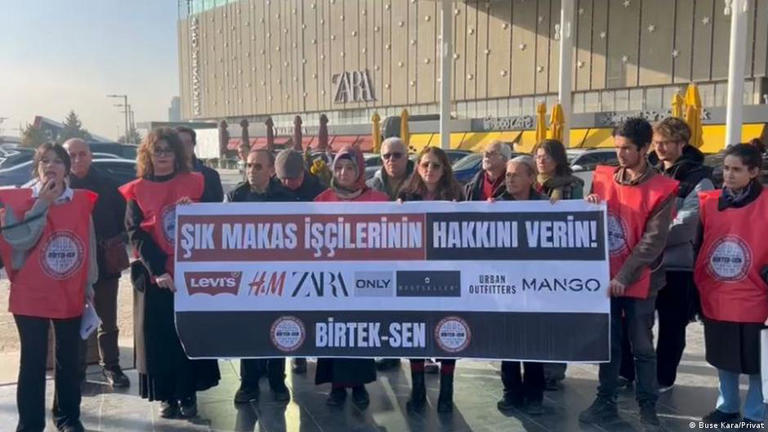
Founded in 1939, Sik Makas is one of Turkey's 500 largest industrial businesses. The company says it exports some 20 million denim products each year, mainly to Europe.
Brands like H&M, Jack & Jones, Levi's, Only and Zara have their products made here. Moreover, the company produces its own in-house brand, Cross Jeans, which it sells in Germany, Poland, the Czech Republic and other countries.
Despite that heft, Turkey's raging inflation and high interest rates have put Sik Makas under pressure. That's why the company, like many of its competitors, has moved some operations to Egypt, where it is cheaper to produce.
Структурный кризис в ключевой отрасли
Traditionally, the textile and clothing industry has been one of the pillars of the Turkish economy and a source of income for hundreds of thousands of families.
Official statistics say about 1.1 million people work in the sector. But unions say the number is actually far higher because it doesn't include the many refugees, women and children working off the books.

Mehmet Turkmen, leader of the BIRTEK-SEN union, stresses that jobs in the industry are already almost exclusively minimum wage, which means workers' monthly wages are currently below the poverty line for a family of four (€650, $776). Unpaid overtime and holiday shifts are standard.
Turkmen is also critical of the fact that a growing number of companies are moving into rural parts of the country in order to cash in on government largesse. The union boss says moving allows them to push down wages further still because of high unemployment in such regions.
Огромная потеря доли рынка в ЕС
While companies complain about the high cost of raw materials and rising production costs, raw numbers illustrate the scale of the crisis: 380,000 jobs have been lost over the past three years and 4,500 companies shut down in 2025 alone.
The most alarming developments are happening on the sector's most important market: The European Union's single market.
Turkish exports to the EU collapsed as imports of goods from China and Bangladesh exploded.
According to the Istanbul Textile and Raw Materials Exporters Association (ITHIB), EU imports of Chinese goods rose 21.8% between January and May of 2025, while imports from Bangladesh rose by 17.9%.
At the same time, imports from Turkey — the third-largest exporter to the bloc after China and Bangladesh — sank by 5.1%.
Of the EU's 10 biggest suppliers, only Turkey and Tunisia lost market share. With more than 60% of Turkish clothing production destined for the EU single market, that kind of loss is existential.
2025 marked the first time in 30 years that Turkey's market share in the EU's clothing and textile sector fell below 5% and the first time in 35 years that their share on global markets fell below 3%.
Пессимистичный взгляд
Seref Fayat, head of apparel and ready-wear assembly at the Union of Chambers and Commodity Exchanges of Turkey (TOBB), forecasts a dark future. He sees no chance of improvement as long as the government continues its attempts to artificially prop up the lira by intervening in currency markets.
President Erdogan has promised to raise state subsidies in the sector to 3,500 lira per worker (about €69), as well as taking steps to freeze layoffs and foster hiring, but employers say that's not nearly enough.
Mustafa Pasahan, Vice President of the Istanbul Apparel Exporters Association (IHKIB) urgently warns: "We have hit bottom. Our strength has run out."
The chari of ITHIB, Jak Eskinazi, is even more blunt, criticizing the government's current political course as destructive to the industry.
"We no longer expect anything from them. We're just trying to save ourselves," he said.
Эта статья изначально была опубликована на немецком языке.
Author: Elmas Topcu