


|
Схема Мурра по выращиванию буйволов стоимостью 340 миллионов рупий не увенчалась успехом у фермеров в Карнали
|
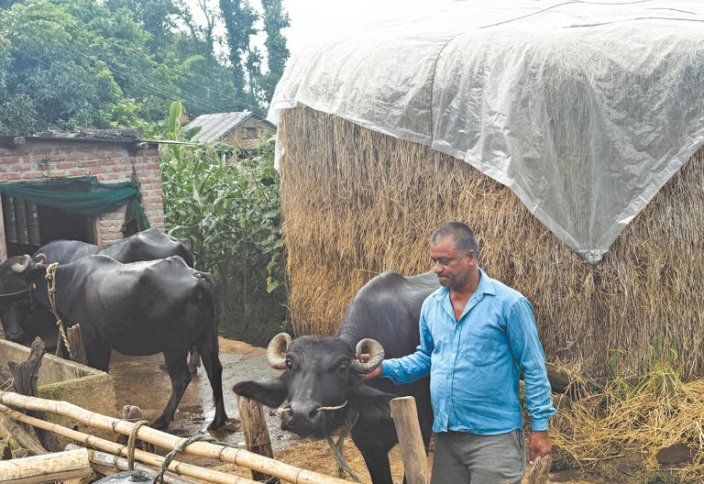
Два года назад Ман Бахадур Кхадка из района 11 муниципалитета Бирендранагар, графство Суркхет, купил двух буйволов Мурра у поставщика Рахамат компании Nepalgunj по 150 000 рупий каждый. Он получил правительственный грант в размере 75 000 рупий на буйвола в рамках широко разрекламированной программы провинции Карнали «Продвижение молочных продуктов и разработка кормов для скота», запущенной для увеличения производства молока.
Инициатива, представленная в 2018 году провинциальным Министерством землепользования, сельского хозяйства и кооперативов, обещала фермерам, что буйволы Мурра — улучшенная порода из Харьяны, Индия — будут производить гораздо больше молока, чем местные виды буйволов.
Убедившись в этом, многие фермеры продали своих родных буйволов и вложили средства в новую породу. Около 2600 буйволов мурра - как самцов, так и самок - были импортированы для 10 ферм в восьми районах на общую сумму 340 миллионов рупий, включая субсидии, сараи и управление кормами.
Но амбициозный проект в значительной степени провалился. «Из двух Муррахов, которых я купил, один умер в течение месяца. Другой больше никогда не зачал. Наши местные буйволы были лучше», — сказала Хадка, явно расстроенная.
Эксперты говорят, что буйволы Мурра процветают в регионе Тераи при правильном кормлении и уходе, но испытывают трудности на холмах и в высокогорных районах, таких как Долпа, где холодная погода, крутая местность и скудные пастбища создают серьезные проблемы.
«Вот что происходит, когда схемы запускаются без надлежащих исследований», - сказал д-р Саджан Рокая, руководитель Управления животноводческой службы Долпы. «Буйволы мурра весят до 700 кг, что почти в два раза больше, чем местные породы, и нуждаются в теплых, сухих сараях. Без таких условий надои молока резко падают, и многие умирают».
В муниципалитете Туллибхери в Долпе фермер Буддхи Б.К. потерял своего буйвола Мурра в течение пяти месяцев, когда он соскользнул со скалы. «Еще шесть человек в деревне погибли таким же образом», - сказал он. «Нам говорили, что это даст 20 литров молока в день, но мы едва получали несколько литров. Это была большая ошибка».
По прошествии пяти лет многие фермеры продали своих буйволов Марра городским торговцам по бросовым ценам. Даже бывший директор по животноводству провинции Капил Прасад Упадхьяя признает, что перед запуском программы не проводилось отдельного технико-экономического обоснования, говоря, что решения принимались на основе «спроса фермеров».
The Karnali provincial government's Murrah buffalo programme-already criticised for lacking a feasibility study-has now been mired in allegations of collusion, commissions, and irregularities. While farmers incurred losses, officials and certain supplier farms reportedly benefited.
Farmers allege that officials at the Directorate of Livestock Development forced them to purchase buffaloes only from select suppliers, mainly KC Dairy and Livestock Farm in Kailali, and Rahamat Suppliers in Banke. Payments were delayed or contracts even cancelled if farmers refused to comply.
Chhinchu Women Small Farmers Cooperative in ward 12 of Bheriganga Municipality received a Rs7.5 million grant to buy improved Murrah buffaloes. But when farmers rejected the low-quality animals at KC Dairy, then-acting director Mohan Giri allegedly threatened to cancel the entire programme, according to the cooperative's chairperson, Uma Gautam.
"Farmers were alarmed when they saw the weak and aging buffaloes at the farm designated by the directorate, so we couldn't pressure them to buy," said Gautam. "We then visited other farms in Kailali where the farmers liked the animals, but in the end, the purchase was cancelled altogether." Farmers eventually returned empty-handed after spending Rs200,000 on transport.
Similar accusations emerged from the Bheri Livestock and Agricultural Production Processing Cooperative in ward 11 of Bheriganga Municipality, Surkhet. Chairperson Navaraj Wali claimed the directorate withheld payments for six months because they did not buy from KC Dairy, forcing farmers to take high-interest loans to pay suppliers.
KC Dairy reportedly sold over 700 Murrah buffaloes across Karnali under the scheme.
Kismat Ali, operator of Rahamat Suppliers, alleged that bribe payments to the directorate's acting director were necessary for securing contracts, claiming to have paid Rs700,000. "Without paying, no one gets their buffaloes approved," he said, though he offered no concrete proof.
Director Giri has denied all allegations, calling them 'baseless' and saying, "I have not taken a single rupee. These claims are made because I served at the same office for a long time."
Between fiscal years 2019-20 and 2023-24, the Dailekh District Livestock Office distributed grants for purchasing 568 Murrah buffaloes and bulls. Of these, 415 were supplied by Samim Farm in Kohalpur, 101 by KC Dairy in Kailali, 32 by Bhim Bahadur Nepali in Achham, and another 32 by Bishnu Yadav in Nepalgunj.
But according to Bakhat Nepali, chairperson of the Shatpratishat Progressive Agriculture Cooperative in Dailekh, most of these buffaloes are no longer in farmers' sheds. "The agreements required farmers to keep the animals for at least five years, but when they produced far less milk than promised and struggled in the hill climate, many were sold off within months-some even slaughtered," he said.
Nepali said they repeatedly requested local police, livestock offices, and municipalities to stop the sales and slaughtering of subsidised buffaloes, but no one heeded. "Many were simply loaded back on trucks and sent away before a year had passed," he added.
In Surkhet, 896 buffaloes and 43 cows were purchased under the programme in six years, costing over Rs 80.2 million. Yet authorities have no record of where these animals ended up.
Suppliers themselves admit using illegal cross-border routes to bring in buffaloes from India to avoid high customs duties. "We can't keep them on farms; we bring them only when there's an order," said Ali Darji of Rahamat Suppliers, which sold over 1,000 buffaloes in Karnali Province.
Despite the programme's failure, the Provincial Agriculture Ministry continued spending under the scheme in violation of its own guidelines. The Auditor General has flagged Rs3.4 million in unsettled accounts and recommended a detailed investigation.