
|
Северная Корея объявляет о победе в «войне с религией»
|
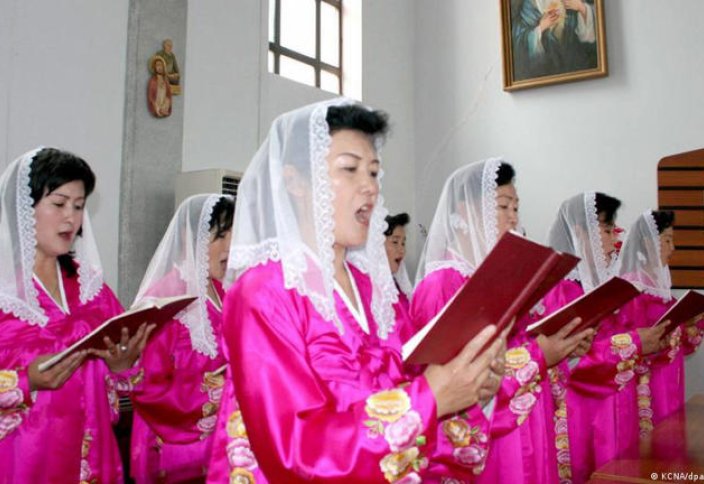
Пхеньян хвастается уничтожением подпольных церквей, но перебежчики и правозащитные организации утверждают, что тайное богослужение продолжается, несмотря на жёсткие репрессии и наказания.
Северная Корея продолжает репрессии против подпольных церквей, при этом диссидентские СМИ сообщают, что власти «хвалят себя за то, что взяли религию под контроль».
Сеульский новостной сайт DailyNK сообщил 18 ноября, что его источники в Северной Корее утверждают, что режим уверен, что он «практически уничтожил» подпольные церкви и религиозные группы.
Однако перебежчики и правозащитники сообщили DW, что уверены в том, что небольшие группы и отдельные лица, тайно преданные своей вере, всё ещё существуют на Севере.
«Они стали мишенью режима, и многие были задержаны, но мы знаем, что всё ещё есть сильные христиане, которые молятся небольшими группами или индивидуально», — сказал Сон Ён Чхэ, южнокорейский учёный и активист Всемирной коалиции по прекращению геноцида в Северной Корее.
«В этом году в Южную Корею прибыли перебежчики, и они говорят, что это всё ещё происходит, и другие перебежчики, у которых там ещё есть контакты, говорят то же самое», — сказал Сон DW.
«У нас тоже есть свои контакты. Я не могу предоставить вам больше информации, так как это было бы опасно для них, но мы знаем, что они всё ещё там.»
Очаги религиозного сопротивления
Очаги религиозного сопротивления могут держаться, но мало сомнений, что их преследуют и преследуют.
Статья 68 конституции Северной Кореи гарантирует свободу вероисповедания, хотя на самом деле режим строго контролирует все религиозные действия, считая церковь угрозой своей власти.
Вместо религиозных учений детей с раннего возраста учат поклоняться трём поколениям семьи Ким, которые с момента основания страны в 1948 году управляют страной железной рукой.
Христиане давно становятся мишенью из-за восприятия их связи с западными влияниями, и любой, кого поймали с Библией, молился или участвовал в какой-либо форме незаконного богослужения, подвергался суровому наказанию.
Вера, классифицированная как антигосударственная
Anyone suspected of being a religious believer can also be identified as a member of the "hostile class," which leads to discrimination in terms of work assignments, education opportunities, where people can live and other social punishments.
The crackdown on religion has intensified since the enactment in September 2021 of the Youth Education Guarantee Act, which puts religious activities on the list of actions that are completely banned for young people. In line with the new law, the Ministry of State Security is stepping up its repression.
"There is no separate department dedicated to cracking down on religion, but counterintelligence departments classify religious activity as an 'anti-state crime' and investigate it themselves," the DailyNK report quoted a source in North Korea as saying.
"Provincial, city and county security agencies conduct autonomous crackdowns, and, in particular, there are intensive crackdowns in border regions, where outside information often enters."
Открытие перед внешним миром
There is added scrutiny of people who have studied abroad, those who have been working in foreign countries or those who attempted to flee but were forcibly repatriated, the source said.
"If they are caught engaging in religious activity after they return home, they are immediately arrested," with Protestants and Catholics sent to prison camps.
The claims chime with reports by charities such as Christian Solidarity Worldwide and government reports on human rights. In its 2025 annual report, the US Commission on International Religious Freedom identified North Korea as "a country of particular concern."
Describing the North as "one of the worst religious freedom violators in the world in 2024," the report said Pyongyang "treats religion as an existential threat to the country" with Christians viewed as "collaborators of imperialistic forces and enemies of the nation and the revolution."
"Simply possessing a Bible, interacting with Christian missionaries, or engaging in worship can lead to severe punishment, including torture, forced labor, imprisonment, and execution," it said, adding that as of 2024, three South Korean missionaries captured in the North are still being held after at least a decade behind bars.
"There is simply no freedom of religion in North Korea," said Eunju Kim, who fled the North with her mother in the late 1990s and is now a campaigner with the HanVoice refugee resettlement organization in Seoul.
Тихое неповиновение
"There is a church in Pyongyang, but it is only there so they can claim that people are free to practice religion when in truth anyone who does is punished," she said. "The state sees religion as a political crime and there are serious punishments and, in the worst-case scenario, execution."
But there are still some who choose to quietly defy the regime.
"They can ban religion, but they cannot stop people believing in Christ," Kim said. "People who experienced the church and Christianity in China before being repatriated to North Korea may still keep their faith and belief in God and some of them will continue to worship."
"They will do it silently, without letting anyone around them know because it is not safe," she added.
"There will be small groups, but many will be people praying by themselves."
Редактор: Кит Уокер
Author: Julian Ryall