


|
Саудовская Аравия против ОАЭ: как накаляется соперничество в странах Персидского залива
|

Напряжённость вокруг Судана, Йемена и Израиля, а также конкуренция в области технологий и добычи нефти напрягают отношения между Эр-Риядом и Абу-Даби.
Дипломатические отношения между Саудовской Аравией и Объединёнными Арабскими Эмиратами (ОАЭ) рискуют ухудшиться из-за поддержки противоборствующих фракций в региональной войне.
Во время недавнего визита в Вашингтон наследный принц Саудовской Аравии Мухаммед бин Салман, или MBS, по сообщениям, попросил президента США Дональда Трампа оказать давление на Абу-Даби по поводу предполагаемой поддержки парамилитарных сил быстрой поддержки в Судане. Когда в апреле 2023 года началась война в Судане, Саудовская Аравия поддержала враждующие суданские вооружённые силы. Тем временем они перешли к посредничеству между сторонами.
Конфликт в Судане стал крупнейшим гуманитарным и кризисом перемещения в мире. А Объединённые Арабские Эмираты продолжают обвиняться в поддержке и оснащении Сил быстрой поддержки военным путём.
Вместо того чтобы обострять ситуацию, президент ОАЭ шейх Мохаммед бин Зайед Аль Нахайян, или MBZ, воздержался от публичных комментариев по поводу просьб саудовцев о помощи у Трампа. Вместо этого он вновь подчеркнул, что ОАЭ не участвовали в бушующей войне в Судане.
«То, что происходит, это... естественная эволюция очень тесного партнёрства между двумя всё более уверенными региональными державами», — рассказал DW Кристиан Александер, старший научный сотрудник аналитического центра Rabdan Security and Defense Institute в Абу-Даби.
По его мнению, обе страны реализуют амбициозные национальные трансформационные программы и реализуют большую стратегическую автономию.
«Это иногда приводит к заметным различиям в политике», — сказал Александр.

Исторические связи между саудитами и ОАЭ
When Mohammed bin Salman became Saudi Arabia's defense minister in 2015 at age 29, the United Arab Emirates was already under the de facto leadership of 54-year-old Mohammed bin Zayed Al Nahyan (MBZ).
"MBZ saw in MBS the opportunity to craft a new, strategic alliance between Saudi Arabia and the United Arab Emirates," Cinzia Bianco, a Gulf Research Fellow at the European Council on Foreign Relations, told DW.
She explained that MBZ did not share many common viewpoints with former Saudi King Abdallah, who passed away in 2015.
"MBZ supported MBS on his way to become Saudi Arabia's crown prince and de facto leader in 2018," she said, adding that "when you craft such a strong and close relationship, it is normal that even the smaller differences can seem huge."
Since 2018, Bianco has been observing several instances where divergences were peaking.
"But whenever the situation was about to implode, both sides worked hard to contain it below the threshold of a fully-fledged crisis," she said.

Противоположные позиции по Йемену, добыче нефти
For example, in 2018, when Crown Prince Mohammed bin Salman was globally scrutinized after the murder of the Saudi critic Jamal Khashoggi in the Saudi consulate in Istanbul, the prince expected the full support of the United Arab Emirates, Bianco recalls.
"But the Emiratis hesitated to support MBS in that situation because they were afraid that the reputational blowback would have hit them, too," she said.
Another example for opposing Saudi and Emirati positions preventing a smooth cooperation was the political situation in Yemen. In 2015, a year after the Iran-backed Houthis seized then-capital Sanaa and ousted the government, Saudi Arabia intervened with a coalition of nine countries, including the United Arab Emirates, in an effort to restore Yemen's former government.
"However, the Emiratis were not blindly following the Saudis, but rather pursuing their own agenda, Bianco said. "Even if that meant that some of their actions would undermine the Saudi agenda."
Above all, the UAE started supporting Yemen's Southern Transitional Council, which seeks a secession from the Houthi-controlled north and center of the country.
Saudi Arabia, however, prefers to see Yemen united and has signalled that they are not fully opposed to the Houthis governing Yemen anymore.
Another example came in 2021, when the UAE — who was keen on expanding its own oil production — opposed Saudi Arabia's push for a curb in oil supply within OPEC, the Organization of the Petroleum Exporting Countries to which both Saudi Arabia and the UAE belong.
"The disagreement was brief, managed through dialogue, and ultimately resolved within the framework of continued joint market management," Kristian Alexander recalls.
Since then, both countries have repeatedly cooperated on significant production cuts to stabilize global oil markets, underscoring that cooperation still outweighs rivalry in energy policy, Alexander added.
Национальные стратегии как ключевой фактор
Furthermore, both Riyadh and Abu Dhabi introduced strategic agendas to position their countries for the future and diversify their income away from oil by investing into technology and becoming AI hubs. Saudi Arabia announced its economic and societal overhaul agenda "Vision 2030" in April 2016, whereas the Emiratis introduced "UAE 2031" in November 2022.
"While the economic competition is quite severe, none of these tensions are going to push either country into confrontation, as both know that the region is too unstable for that to happen and they need to see things from the same point of view," Michael Stephens, senior Middle East Security advisor at the London-based Royal United Services Institute, told DW.
ECFR's Bianco agrees.
"From a geopolitical point of view, it makes zero sense for them to turn their differences into a crisis because they actually need to unite and confront other actors, such as Iran and increasingly also Israel," she said.
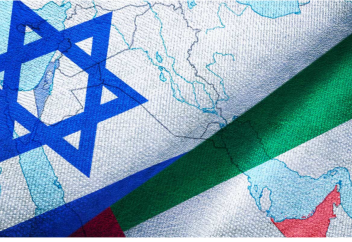
While the UAE signed a US-brokered normalization deal with Israel in 2020, Saudi Arabia stalled such negotiations after the Hamas terror attack on Israel on October 7, 2023, and the ensuing two-year-war in Gaza.
"The UAE do not want to exit this [normalization] agreement, they would prefer things just go back and quietly return to some sort of normality," Stephens said.
Despite US pressure to get Riyadh to normalize relations with Israel as well, Saudi Arabia is not looking for a return to the negotiating table unless there is a pathway for a two-state solution between Israel and the Palestinians, Stephens stated.
However, Israel's Prime Minister Benjamin Netanyahu rejects the establishment of an independent Palestinian state alongside Israel, with Jerusalem as a shared capital.
It remains to be seen if the question over ties to Israel will have an impact on Saudi-Emirati relations.
Редактор: Карла Блейкер
Author: Jennifer Holleis