
|
Режим в Иране изменится, но не в сторону демократии, считает ветеран дипломатии
|
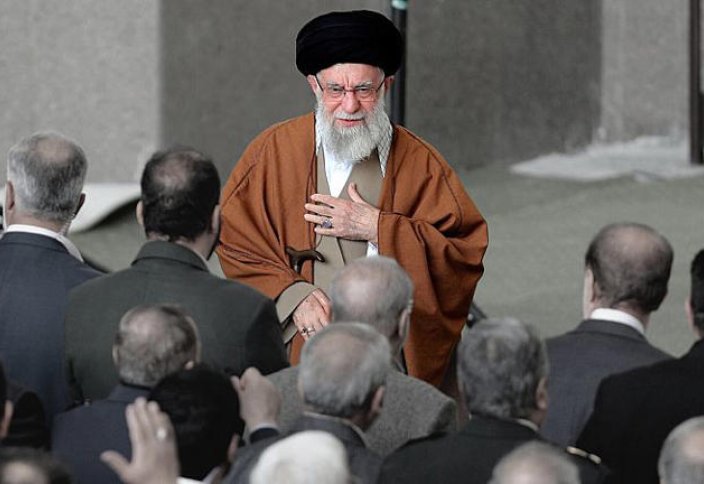
Бывший американский дипломат, который помогал вести переговоры по ядерной сделке с Ираном, сказал, что смена режима в Иране остается маловероятной, несмотря на недавний конфликт между Израилем и Ираном, предупредив, что 12-дневные удары, возможно, усилили бескомпромиссные элементы в иранском правительстве.
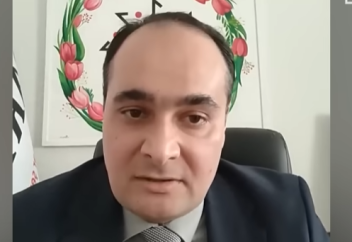
Алан Эйр, который работал в переговорной группе по Совместному всеобъемлющему плану действий (СВПД) при президенте США Бараке Обаме, заявил во вторник на виртуальном заседании Института Ближнего Востока, что, хотя политические изменения начались после последнего израильско-иранского конфликта, они не приведут к смене правительства в западном стиле.
По словам Эйра, последствия недавнего конфликта «вероятно, сделают нынешний режим более милитаризованным, изолированным и ориентированным на безопасность», вопреки ожиданиям того, что реформистские фракции, включая президента Масуда Пезешкиана, получат влияние.
Отвечая на вопрос о том, может ли администрация Трампа использовать нынешние условия для дипломатического прогресса, Эйр выразил скептицизм по поводу возможностей США для таких интервенций.
«Даже в лучшем случае США не очень преуспели в проведении таких тонких манипуляций с силовыми структурами других стран», — сказала она.
The former diplomat noted that Iranian reformists "play a marginal role" and suggested that Washington lacks both the expertise and the political will to boost their chances from outside.
У КСИР есть все карты?
Iran's current regime shows no signs of immediate change, with military commanders and politicians still publicly pledging loyalty to Ayatollah Ali Khamenei.
Furthermore, calls for a nationwide uprising by Israel and opposition groups abroad have not materialised since the conflict ended.
Meanwhile, Eyre said the Islamic Revolutionary Guard Corps (IRGC) is the most likely actor to exploit any future succession proceedings.
Notably, according to her, Khamenei initially held limited power but gradually expanded his authority through appointing loyalists and gatekeeping access to resources.
"Whoever succeeds Khamenei has to go through the same process. But the new leader will be very weak in the short term and will inevitably follow Khamenei's policy. The IRGC will play a leading role in this power vacuum," Eyre said.
She suggested that if Khamenei's successor fails to establish sufficient authority, "it is likely that the leadership position will become a ceremonial and demonstrative position and the real power will be in the hands of the Corps."
Following US strikes on Iranian nuclear facilities, President Donald Trump has indicated that nuclear negotiations with Iran might resume, but that there was no urgency to restart discussions.
"They want to have a conversation. I'm in no hurry to have a conversation because we've taken down their facilities," he said on Tuesday.
Although Tehran has put its cooperation with the UN nuclear watchdog, the IAEA, on hold, Pezeshkian has hinted at possible openness to resume talks on Monday, stating in a social media post that "the window for diplomacy is open and we are pursuing this peaceful path seriously."
Tehran has maintained it will not abandon uranium enrichment under any circumstances.
Africanews
Сложная политическая и военная структура власти Ирана
Политическая система Ирана известна своей сложностью — она смешивает избранных лидеров с теократическими и военными силовыми игроками. Вот ваше руководство о том, как все это работает.

Нападение Израиля на Иран в этом месяце ознаменовало собой драматическую эскалацию в давно тлеющем конфликте.
Но удары были нацелены не только на военные цели. В публичном обращении премьер-министр Израиля Биньямин Нетаньяху призвал иранцев восстать против того, что он назвал «жестоким и репрессивным режимом».
Будь то психологическая война или искренний призыв к восстанию, послание подчеркнуло тот факт, что руководство Ирана сталкивается с опасными моментами. Годы санкций, внутренних беспорядков, а теперь и открытой военной конфронтации подняли новые вопросы о том, как функционирует Исламская Республика.
Иерархия власти в Иране, как известно, сложна. Существуют неизбираемые советы и должности, которые обладают огромной властью, но они назначаются или контролируются выборными или полувыборными органами.
Вот путеводитель по ключевым фигурам на вершине политической и военной иерархии Ирана и по тому, как осуществляется власть в Тегеране.
Верховный лидер — аятолла Али Хаменеи
Пожизненно назначен в 1989 году Ассамблеей экспертов
The highest authority in Iran, Ayatollah Ali Khamenei holds direct or indirect power over all matters of state — from foreign policy to domestic politics. He appoints key officials, including the heads of state media and the judiciary, and has representatives in nearly every major organization.
Though unelected by the public, Khamenei was appointed by the Assembly of Experts following the death of Ayatollah Ruhollah Khomeini, the leader of the 1979 revolution. The Assembly of Experts is an elected body of Islamic clerics tasked with selecting, supervising, and — if necessary — dismissing Iran's Supreme Leader.
Article 110 of the Constitution outlines the duties and powers of the Supreme Leader, including the declaration of war and peace, as well as the mobilization of the armed forces.
Президент Ирана — Масуд Пезешкиан
Избран в июле 2024 г.
Masoud Pezeshkian won Iran's snap presidential election in July 2024, following the sudden death of President Ebrahim Raisi in a helicopter crash two months earlier. He became the Islamic Republic's ninth president, making him the country's second-highest-ranking official after the supreme leader.
Pezeshkian, known for his moderate stance, campaigned on promises of limited social reforms, renewed negotiations with the West over Iran's nuclear program, and addressing the public discontent sparked by the 2022 death of Jina Amini, a 22-year-old Kurdish woman who died in police custody after she was arrested for allegedly wearing her headscarf too loosely.
Iranian presidents serve four-year terms and are responsible for managing day-to-day governance and representing the country in international diplomacy. However, power rests with the Supreme Leader, who holds authority over the military, judiciary, and key aspects of foreign policy. Presidents cannot override the Supreme Leader on matters of strategic importance.
Reformist leaders like Pezeshkian — and before him, Hassan Rouhani, who brokered the 2015 nuclear deal with the Obama administration — have often faced strong pushback from conservative institutions, including the Guardian Council and the Islamic Revolutionary Guard Corps (IRGC). Efforts by Rouhani to ease tensions with the West were significantly set back when the US exited the nuclear agreement in 2018, following a decision by then-President Donald Trump during his first term in office.

Совет стражей
Председатель: Ахмад Джаннати, избран в июле 2024 года
The Guardian Council is tasked with ensuring that legislation passed by Iran's parliament complies with the constitution and Islamic principles. The 12-member body wields significant power: Six members are Islamic clerics appointed directly by the Supreme Leader, while the remaining six are legal scholars selected by parliament. Beyond its legislative role, the Council also vets candidates for key elected bodies, including the presidency, parliament, and the Assembly of Experts. This gives it considerable influence over who can participate in Iran's tightly controlled electoral system.

Ahmad Jannati, a hardline cleric and ally of the Supreme Leader, has chaired the Guardian Council since 1992. Known for his conservative views, Jannati has played a central role in vetting candidates and shaping legislation in line with the Islamic Republic's principles.
Совет по различению целесообразности
Another key institution is the Expediency Discernment Council, a powerful body tasked with mediating disputes between parliament and the Guardian Council, particularly when proposed laws conflict with Islamic law or the constitution. Its members — appointed directly by the Supreme Leader — include senior clerics, military officials, former presidents, and technocrats. Though officially an advisory body, the council often functions as an extension of the Supreme Leader's authority, influencing national policy and ensuring continuity within the political system during internal conflicts or crises.
Корпус стражей исламской революции (КСИР)
Главнокомандующий: генерал Мохаммад Пакпур, избран в июне 2025 года
Established in the wake of Iran's 1979 Islamic Revolution, the IRGC began as a volunteer militia tasked with protecting the newly established regime. During the 1980-1988 Iran-Iraq War, it evolved into a powerful parallel military force. After the conflict, the IRGC expanded its influence by directing major reconstruction efforts, which laid the foundation for its growing presence in Iran's economic and political spheres.

Today, analysts estimate the IRGC controls between 20% and 40% of Iran's economy, largely through its engineering arm, Khatam al-Anbiya, and wide-ranging interests in sectors including energy, agriculture, and finance — offering employment and political leverage.
Militarily, the IRGC is tasked with defending the regime, both domestically and abroad. Its Basij militia monitors internal dissent, while the elite Quds Force oversees operations across the region. The Guards' intelligence wing rivals official security services and plays a key role in countering perceived domestic and foreign threats. Under Supreme Leader Ayatollah Ali Khamenei, the IRGC's political and security roles have expanded significantly.
Following the June 13 Israeli airstrike that killed IRGC commander Hossein Salami and several other top generals, Khamenei appointed Brigadier General Mohammad Pakpour — a veteran of the Iran-Iraq War and longtime head of the IRGC's ground forces — as the organization's new leader.
Парламент (Меджлис)
Спикер: Мохаммад Багер Калибаф, избран в мае 2020 года
Iran's parliament, known as the Majlis, or ICA, is a single-chamber legislature of 290 members elected to four-year terms through direct national elections. Since the first parliamentary session in 1980, the composition of the Majlis has changed dramatically. While clerics once held more than half the seats, they made up just 5.5% of lawmakers in 2020. In contrast, members with backgrounds in the IRGC have become increasingly influential, reflecting the growing role of security and military figures in Iranian politics.

The Majlis holds wide-ranging legislative powers, including drafting laws, approving the national budget, and ratifying international agreements. However, its authority is limited by the Guardian Council, which vets all parliamentary candidates and has the power to reject legislation it deems inconsistent with the constitution or Islamic principles.
Mohammad Bagher Qalibaf, a hardline conservative, has served as speaker since 2020 and was re-elected to the post in May 2025. A former IRGC general, national police chief, and mayor of Tehran, Qalibaf is seen as one of the most influential figures in Iran's political establishment.
Редактор: Роб Мадж
Author: Monir Ghaedi