






|
Пустые церкви Германии перепрофилированы по мере сокращения приходов
|
Число практикующих христиан в Германии сокращается. В результате появились избыточные церкви. Что происходит с этими пустыми храмами?
В последний день церковь Святой Анны почти снова заполнена. Хор поёт, а маленький орган поддерживает их. Но это последняя месса в небольшой католической церкви в Гильдехаузе, районе Бад-Бентхайма, недалеко от германо-голландской границы. В будущем здание больше не будет местом поклонения.
Ближе к концу службы гибель этой церкви становится болезненно реальной. Прихожане из общины открывают алтарь и уносят реликвии. Это небольшие реликвии святого — будь то осколки костей или кусочки ткани, которые всегда включены в алтарь освящённой католической церкви.
Закрытие церквей — это эмоциональное событие. «Это влияет на сердце и глаза. Это трогательно», — говорит католический пастор Хубертус Голдбек DW, вытирая начало слёзы из уголка глаза.
То, что переживает его небольшая община, — это то, с чем сталкиваются и многие набожные христиане по всей Германии. Когда церкви уменьшаются, им также приходится отказываться от зданий.
Число членов церкви в Германии стремительно сокращается. Только в 2024 году две крупные церкви потеряли более миллиона христиан из-за того, что люди покинули церковь или умерли. В настоящее время более 45% немцев всё ещё принадлежат либо к протестантской церкви в Германии, либо к католической церкви. Тридцать лет назад этот показатель составлял почти 69%. Вот почему церкви сейчас деконсекруются или десакрализуются.
С 2000 года сотни католических и протестантских церквей были закрыты. В ответ на расследование DW Конференция епископов Германии сообщила о закрытии и закрытии 611 католических церквей в период с 2000 по 2024 год. Протестантская церковь оценивает, что за тот же период было окончательно закрыто около 300–350 церквей; более точные цифры недоступны.
Предлагаемые церковные здания
А что происходит с бывшими храмами? В некоторых городах, особенно в Берлине, растущие православные общины захватили церковные здания. Но это остаётся исключением. Их часто продают. Только в столице в настоящее время выставлены на продажу несколько крупных церковных зданий. И не редкость, когда церкви сносят.
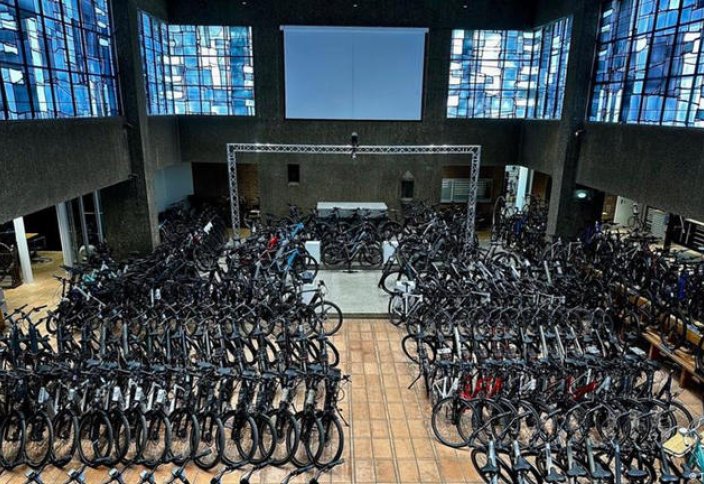
Some are repurposed. In Jülich, a town between Cologne and Aachen, bicycles are now sold in the former Catholic St. Rochus Church. Thomas Oellers moved his business, Toms Bike Center, into the church building.
Oellers tells DW that the parish approached him and asked him if he could imagine running his business in the church. It is the church where he himself was baptized and took Communion, and where he often attended church services. On the exterior, the listed building has changed remarkably little.
In Wettringen, just north of Münster, an abbey has been transformed into a "soccer church” where footballs are knocked about. In Kleve, the former Protestant Church of the Resurrection serves as a boxing arena. Former churches now house pubs, libraries and book stores. Entire cloisters have even been turned into hotel complexes. In Düsseldorf, a hotel has retained its traditional name Mutterhaus (Mother House) in a nod to its original use as a convent for nuns.
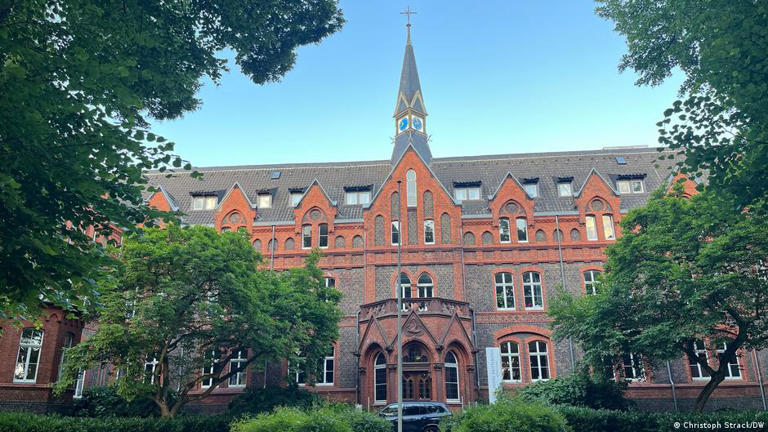
In times of housing shortages, there are more and more cases of architects converting church buildings into residential buildings. In Berlin, Rostock, Trier, Cologne and Wuppertal, for example.
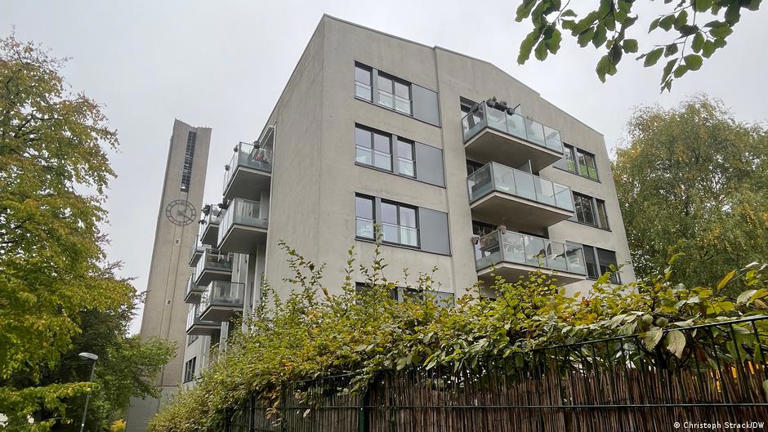
One of the earliest large complexes is the Lukas-K-Haus in Essen. The Protestant St. Luke's Church, built in 1961, was deconsecrated in 2008 and converted into apartments between 2012 and 2013. At the bottom of the stairwell, two plaques now hang: one from 1959 and the other from 2012. And the abstract-colored windows there are still the original church windows.
Alexandra Schröder has lived in the old church since its repurposing. "No one would have thought that I would be living above an altar, " she says. For her family, it was simply practical at the time as the apartment had several bedrooms and there were good schools nearby. That was the deciding factor.
One floor below is a physiotherapy practice. Director Jessica Günther explains that she came across the converted church building by chance while looking for new premises. She says the building has a "nice, calm feeling" that is good to work in. She knows that the steps inside her practice once led up to the altar but doesn't want to overstate the importance of that.
But one of her patients is positive about this. It is an expression of faith to "help people in need," Stefan Hebenstreit tells DW. Even if the buildings are no longer churches, using them as a daycare center or a physiotherapy practice is "very practical." Hebenstreit, a practicing Christian who has suffered several strokes, says this slowly and thoughtfully.
Звук колоколов отсутствует
To hear anything critical about the church conversion, you have to speak to people on the surrounding streets who have lived around St. Luke's for decades. One misses the sound of the bells. Another regrets that the clocks on the church tower have stopped forever.
The two major churches have official commissions and papers on the issue of repurposing churches. Researchers concern themselves with the question too. And yet the specific neighborhood itself is often pivotal.
Art historian Klaus-Martin Bresgott from the cultural office of the Protestant Church in Germany and a group of architecture students investigated how important former church premises can be for a neighborhood and a residential area, using the example of a large church in Berlin.
The Protestant Church no longer needs the huge St Stephen's Church (Stephanuskirche) in the district of Wedding. The building, which was erected between 1902 and 1904, was always too big in fact. But back then, people liked to build big. Today, the church is closed and in such need of refurbishment that you are no longer allowed to go inside even wearing a hard hat.
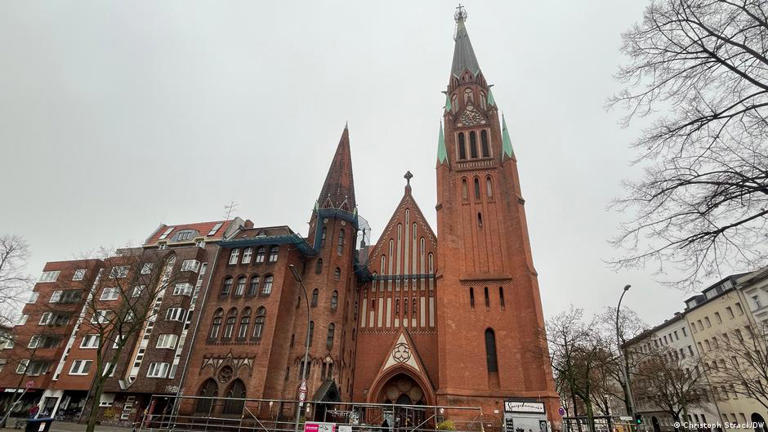
Bresgott and the students did not examine the building first, instead they interviewed people in the neighborhood, which has the reputation of being an area with social problems. One thing is clear: The neighborhood lacks public space, opportunities to gather, play sports or engage in cultural or community activities.
Times always change and sometimes churches are considered more important. other times they were unimportant, says Bresgott to DW.
"We know that during the Napoleonic Wars, churches served as horse stables for decades. But they remained standing." For him, St. Stephen's Church is a perfect example of how a church that was too big in the first place could still serve society. "We must not immediately panic and say: close down, give up, " he warns.
Эта статья была изначально написана на немецком языке.
Author: Axel Rowohlt, Christoph Strack