



|
Почему Китай снова нацелился на подпольные «домашние церкви»?
|
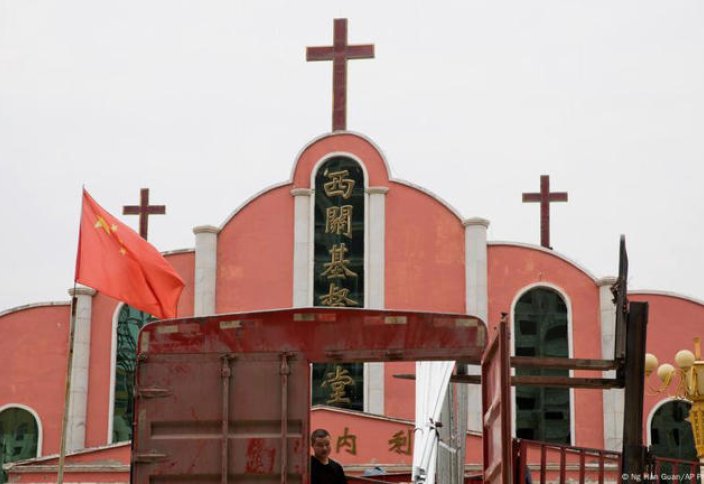
Китай арестовал десятки христианских пасторов в ходе широкомасштабных репрессий против незарегистрированных церквей. DW заглядывает за кулисы последней волны репрессий.
Христиане из подпольных церквей в Китае столкнулись с возобновлением репрессий, которые подчеркивают растущую нетерпимость президента Си Цзиньпина к свободе вероисповедания.
Китайское законодательство требует, чтобы христиане поклонялись Богу только в церквях, связанных с религиозными учреждениями, контролируемыми Коммунистической партией.
До сих пор официально признаны только две христианские группы: Китайская патриотическая католическая ассоциация и Протестантское патриотическое движение трех автономий.
Ранее в этом месяце около 30 пасторов и членов протестантской церкви Сиона — одной из крупнейших неофициальных христианских церквей в Китае — были арестованы по меньшей мере в семи провинциях, в том числе ее основатель Цзинь «Эзра» Мингри.
«Некоторые [полицейские] ломали замки и двери, в то время как другие отключали электричество и притворялись электриками — стучали в двери, прежде чем ворваться», — сказал Боб Фу, китайский пастор, основавший в США религиозную группу ChinaAid, которая внимательно следит за случаями преследования христиан в Китае.

Большинству арестованных предъявлены обвинения в «незаконном распространении религиозного контента в Интернете», поскольку в 2018 году церковь перешла на виртуальные службы и с тех пор выросла как минимум до 10 000 прихожан в 40 городах.
Обуздание христианства
Комиссар Германии по вопросам свободы религии и убеждений Томас Рейчел осудил «нарушение свободы вероисповедания» и призвал к освобождению всех членов церкви.
Госсекретарь США Марко Рубио также подверг критике действия Китая, призвав к немедленному освобождению задержанных и разрешению всем верующим людям принимать участие в религиозной деятельности, не опасаясь возмездия.
«Эти репрессии еще раз демонстрируют, как КПК проявляет враждебность по отношению к христианам, которые отвергают вмешательство партии в их веру и предпочитают поклоняться в незарегистрированных домашних церквях», — сказал Рубио в своем заявлении, имея в виду Коммунистическую партию Китая.
Министерство иностранных дел Китая отвергло критику Рубио, заявив, что Пекин регулирует религиозные дела в соответствии с законом и защищает свободу вероисповедания граждан и нормальную религиозную деятельность.
Foreign Ministry spokesman Lin Jian said the United States should not interfere in Beijing's internal affairs, reported the German news agency dpa.
ChinaAid's Fu told DWthat 23 members of Zion Church remain in detention, though eight have been allowed to meet their lawyers — a rare move made by Beijing "under tremendous international pressure."
"The CCP has indeed made a concession this time," Fu said. "Since those arrested are considered political prisoners, allowing them to meet their lawyers during the criminal investigation period would have been unthinkable in the past."
Си Цзиньпин ужесточил контроль над христианством
China is home to the world's largest persecuted church, with religious freedoms rapidly deteriorating under the Xi since he took power in 2012, according to the non-profit group Global Christian Relief.
Over the past decade, Xi has emphasized the so-called "Sinicization" of religion, tightening ideological control over religious groups and ordering the demolition of churches and crosses.
Mirro Ren, an exiled Chinese Christian now living in the US, told DW she has observed a recent increase in police raids on unregistered independent "house churches" in China.
"I've seen many [church] members get arrested one after another in the past few years, but it was never on this scale," Ren said. "It feels different this time."
Ren was a member of the Early Rain Covenant Church, a house church in the southwestern Chinese city of Chengdu, whose pastor was arrested in 2018 and sentenced to nine years in prison.
She told DW that the registration system is a political tool for authorities to gain greater control over people's beliefs.
"The authorities want to control your thoughts — that's already crossing the line of faith," Ren said.
Fu, the Chinese pastor, also told DW that the persecution comes as authorities consider the worship and gathering of unregistered churches "political and ideological threats."
"[Xi] wants to be like God — if you don't revere, worship, and absolutely obey him, he considers you an intolerable presence in society," he said.
Страх и стойкость в домашних церквях Китая
According to Chinese official data cited by Pew Research, only 2% of China's population — between 29-44 million people — are Christians. But the figures likely exclude members of underground churches.
Many religious scholars estimate there are hundreds of millions of Chinese Christians in total, including members of unregistered churches across all provinces.
Fu told DW that while the mass arrest of church leaders and ministers has sparked fear among church members, life under prolonged surveillance has already made many mentally prepared for the worst.
"Most believers are aware that this could happen sooner or later … even succession plans within the church leadership have been prepared," Fu said.
Despite this, they tend to remain optimistic, including Pastor Jin, founder of Zion Church.
Fu, a friend of Jin, told DW that the arrested pastor believed that "if he goes to prison, it will only make China's churches stronger and more flourishing."
Although the Chinese government detained nearly all pastor-level members during this wave of arrests, Fu observed that gatherings and church services continue as usual.
"I believe history will once again prove that repression [of Christianity] is destined to fail," he told DW.
Редактор: Кит Уокер
Author: Yuchen Li (in Taipei)