





|
Опасения голода в Мьянме, поскольку ООН предупреждает о «катастрофе»
|
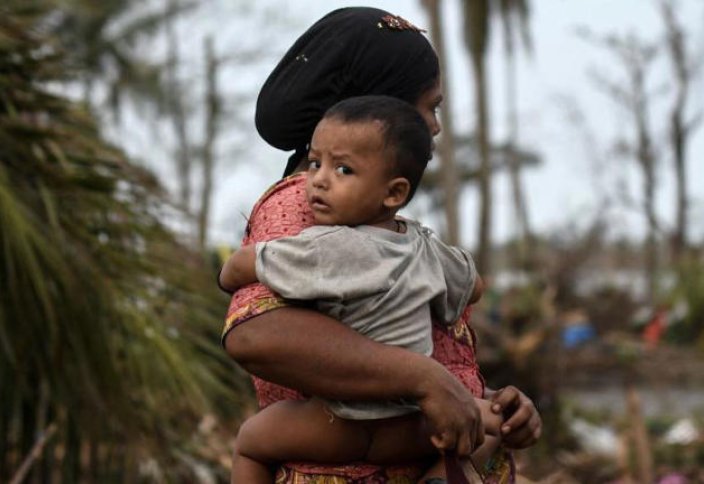
Агентства по оказанию помощи предупреждают о голоде в раздираемом войной штате Ракхайн в Мьянме, а Всемирная продовольственная программа (ВПП) обратилась с срочным призывом о дополнительных пожертвованиях, чтобы избежать «полномасштабной катастрофы».
Агентство пытается накормить быстро растущее число перемещенных лиц в штате, в том числе 140 000 мусульман-рохинджа, которые живут в лагерях с тех пор, как они покинули свои дома во время межобщинных боев в 2012 году.
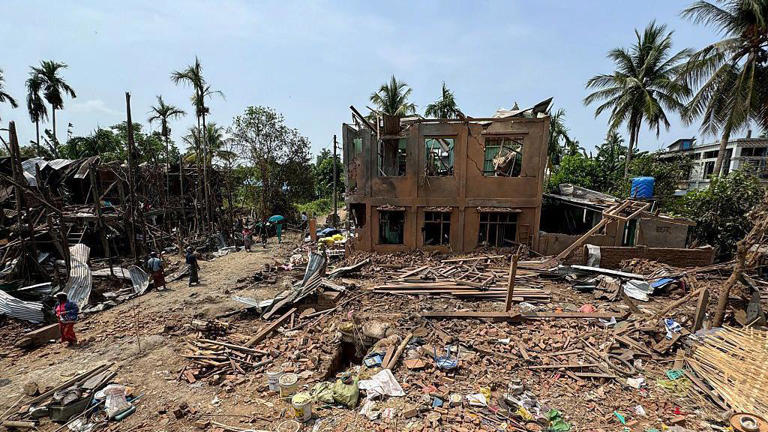
Гражданская война, развязанная военным переворотом 2021 года, разрушила экономику большей части Мьянмы и создала огромные гуманитарные потребности.
Но ситуация в штате Ракхайн, который оказался отрезанным от остальной части страны из-за военной блокады, значительно хуже, чем в других районах.
20 апреля 50-летний отец, проживающий в лагере Он Тау Чжи, добавлял инсектицид в пищу для себя, а также для своей жены и двух детей. Он умер, но быстрое вмешательство его соседей спасло жизни остальных.
Это самый большой из лагерей для перемещенных рохинджа, расположенный вдоль дороги, ведущей на запад от столицы штата Ракхайн Ситтве.
Еды стало так мало, что семья голодала. Эту версию подтвердили четыре человека из Ситуэ, которые говорили с Би-би-си.
Сообщается, что в июне этническая семья из пяти человек, проживающая в Ситуэ, умерла таким же образом.
Сообщается, что на прошлой неделе пожилая пара, которая была вынуждена покинуть свои дома в результате недавних боев между военными Мьянмы и повстанческой армией Аракана, повесилась в отчаянии из-за нехватки средств и еды.
ВПП ООН сообщила о 60-процентном сокращении мирового финансирования в этом году по сравнению с 2024 годом и заявляет, что может накормить только 20% жителей Мьянмы, столкнувшихся с острой нехваткой продовольствия.
В марте она была вынуждена сократить помощь Ракхайну, несмотря на резкий рост с начала года числа семей, не способных обеспечить себя самостоятельно.
«Люди оказались в ловушке порочного круга – они отрезаны конфликтом, лишены средств к существованию и остались без гуманитарной безопасности», – сказал Майкл Данфорд, представитель ВПП ООН в Мьянме.
"We are hearing heartbreaking stories of children crying from hunger and mothers skipping meals. Families are doing everything they can, but they cannot survive this alone."
Rakhine was already badly affected by the violence in 2012, and then the killing and mass expulsion of Rohingyas in 2017.
Then in 2023 the military blocked all trade and transport routes to the rest of the country to try to cut supplies to the Arakan Army, an insurgent group that has advanced quickly to take over most of the state.
Sittwe is now besieged and accessible only by sea and air. Farmers have given up harvesting their rice crops because they can no longer access buyers.
Rohingyas are barred by the military from going to sea to fish, one of their few sources of food and income.
And even when they have funding, international aid agencies cannot get to most of the areas now controlled by the Arakan Army.
''People can't go out. There are no jobs. Prices have increased fivefold," one camp resident told the BBC. "There is no income, so they are really struggling to make ends meet. Most people survive now by eating boiled taro roots."
The military's demand for conscripts to fight against the Arakan Army has imposed an additional burden. Thousands of Rohingya men have been enlisted to help defend Sittwe, and those families who have not sent a man to join up must help pay to support those who have.
Mohammad, a Rohingya living in one of the camps near Sittwe, told the BBC that families usually pay this from the allowance they get from the WFP.
This was stopped in March, but even when it resumed in June, he said many families needed to use all their allowance to pay off the debts they had run up.
The WFP says it is seeing alarming signs in all communities in Rakhine of extreme economic distress. "Families are being forced to take desperate measures to survive: rising debt, begging, domestic violence, school drop-outs, social tensions, and even human trafficking."
The agency says the failure to meet its funding needs is the responsibility of many donor countries, and does not name any.
But the decision by the Trump administration to cut 87% of USAID funding will almost certainly be a significant part of WFP's difficulties.
Last year the US contributed nearly $4.5 billion to the WFP, close to half of all the donations it received from governments around the world.
Last November the UN issued a stark warning of a "famine in the making" in Rakhine.
That its principal emergency food agency is still so far short of its funding needs, and issuing yet another appeal nine months later, is indicative of the brutally unsympathetic environment in which the international aid industry must now operate.