






|
Молодежь Африки может чувствовать себя более одинокой, чем вы думаете
|
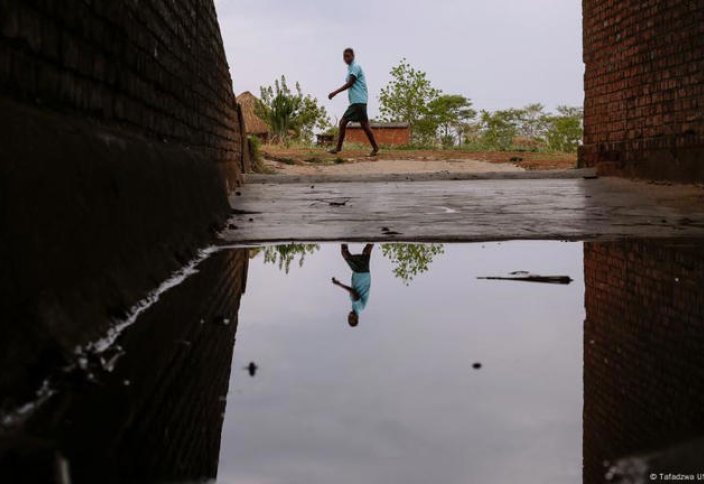
Только в колледже Хивот Даниэль поняла, что в детстве она была одинока.
Ее отец умер, когда ей было два года, оставив мать занятой удовлетворением основных потребностей. Я рос единственным ребенком, и никто не задавал Дэниелу вопросов вроде: «Как прошел твой день? Что вы планируете после школы? Вас что-то беспокоит?
«Не было никакой эмоциональной поддержки. Я так благодарен своим родственникам, потому что именно благодаря их поддержке я получил образование», — сказал Даниэль, когда мы разговаривали. «[Но] они больше сосредоточились на финансовой поддержке, чем на эмоциональной. Они говорили: «Что вы имеете в виду под одиночеством? Почему вы говорите «одинокий»? Мы с вами. Но это не то, как я хотел делиться с ними своим опытом».
Сейчас ей 22 года, и она изучает психологию и фармакологию в столице Эфиопии Аддис-Абебе, и Даниэль рассказала DW, что ее детство сделало ее стойкой, оно сделало ее тем, кем она является сегодня. Но тогда, по ее словам, ей было грустно и одиноко.
Высокая распространенность одиночества в странах Африки
В последние несколько лет накапливаются доказательства того, что одиночество является серьезной и широко распространенной проблемой среди африканской молодежи.
В 2023 году Gallup, институт изучения общественного мнения, объединился с материнской компанией Facebook, Meta, чтобы провести глобальный опрос о социальных связях. Они опросили около 1000 человек в каждой из 142 стран. И они обнаружили, что среди 29 стран с самой высокой распространенностью одиночества 22 страны находятся в Африке.
«Это не только проблема Северной Америки, Европы или богатой страны. Одиночество является глобальной проблемой», — сказала Джулианна Холт-Лунстад, научный руководитель исследования. «И это не кажется менее важным в Африке, где предполагается, что другие проблемы [такие как бедность] могут быть более важными».
Теперь, в 2025 году, в докладе Всемирной организации здравоохранения говорится, что люди в более бедных странах особенно уязвимы к одиночеству и что больше всего страдают молодые люди.
Что вызывает одиночество молодежи в Африке?
There are many possible reasons for loneliness. It needn't be a pathological condition, but it can become one, or at least a long-term problem for young people who feel they have got stuck and can't get out.
For Hiwot Daniel, it has been hard to build deep connections at university. "We all come from different backgrounds, different cultures, different languages. That makes it hard to understand each other," she said.
Social media and other digital technology also play a role in youth loneliness in Africa, as they do in other continents. But the situation varies from country to country in Africa.
But one aspect seems to be universal and that the ways in which urbanization has changed family structures in Africa.
"We used to live in a communal way," said Amani Masaule, a youth mental health advocate from Tanzania. "But urbanization and digitalization are forcing us to live in individualistic ways."
In some cases, that has meant ties to family and friends have grown weaker. People move away, start new families in the cities where they work, and they have less time for their families back home.
"Everyone's running to work, the world's moving at 100 miles-an-hour, you've got to do everything at once," said psychiatrist Sonia Kanékatoua. "The quality of family life that used to exist [disappears]."
Then, there are those young people who are out of work.
"Poverty and unemployment also contribute to loneliness. Many youths in Africa face the challenge of unemployment," said Masaule. "They have nothing to do, so they find themselves isolating from others."
Стигматизация и суеверия вокруг одиночества в Африке
Mental health is a taboo in many African countries, it is "hampered by a lot of ignorance," said Jibril Abdulmalik, a Nigerian psychiatrist. "People think it's a strange disease, a spiritual attack, or something demonic. Nobody wants to admit that a family member has a mental illness."
There have been cases of individuals being locked away by relatives, who want to protect the family reputation, said Abdulmalik.
For young men, the stigma can be even worse than for women, said youth advocate Masaule: "Especially for men, it is seen as a weakness to express your feelings. Some isolate themselves until [their loneliness] reaches a point where they commit suicide."
Решения для одинокости: укрепление семейных структур, наставничество
As many African countries lack the resources to provide sufficient mental health care at a public level, some experts told DW that African communities should try to strengthen family structures again.
"We have to appreciate that our strong family cohesion is a strength that we should not throw away," said Abdulmalik. "We have to strengthen the family and parents. Young parents need to be very intentional about creating time for their children. You can't have children and then you outsource the parenting to the housekeeper or to schoolteachers."
And that may mean reviving some traditional ways. "By fitting into this global mold, we have lost a lot of things," said Kanékatoua.
But loneliness is complex and highly individualistic, because it is often connected with the very way an individual sees themselves in the world.
Daniel took a step away from her community, got an education — found a way to understand and describe her mental health and emotional situation.
But she thinks help needs to come earlier in people's lives, before they even get to university.
"Mentorship activities, not only in university, but also in high schools," said Daniel. "I could mentor a young girl like someone in grade 12 who is about to join university, having mentors could help to fight loneliness."
Под редакцией: Зульфикар Аббани
Author: Anna Carthaus