


|
Маоистские репрессии в Индии заставили жителей деревни скорбеть
|
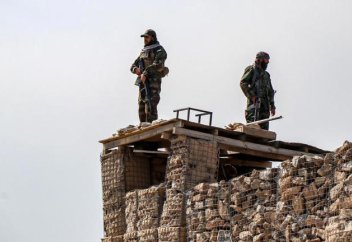
Индия пообещала подавить давнее маоистское повстанческое движение «Наксалы» к марту 2026 года. В джунглях Чхаттисгарха жители деревни оплакивают погибших под перекрестным огнем.

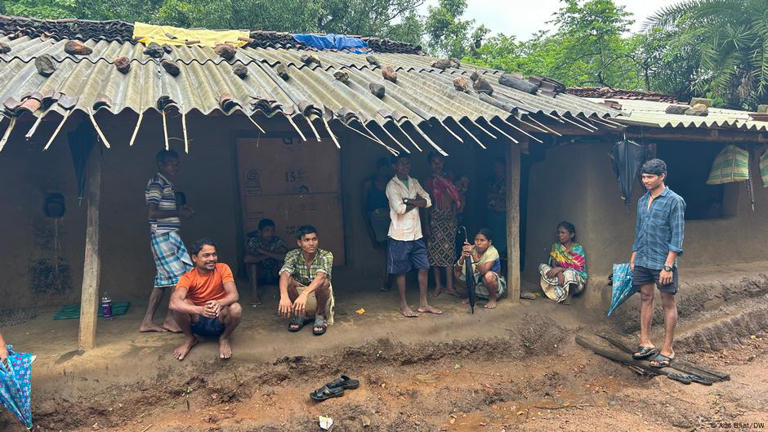
Дождливым днем в Бодге, отдаленной деревне в лесах Чхаттисгарха, штата в центральной Индии, Сукли Оям тихо сидит на глиняном крыльце своего дома с соломенной крышей.
Она держит в руках фотографию своего 22-летнего сына Рамеша, который был убит в прошлом году в перестрелке между правительственными войсками и левыми маоистскими повстанцами, известными как наксалы или наксалиты.
Наксалы, названные в честь деревни в предгорьях Гималаев, где почти шесть десятилетий назад началась их вооруженная кампания, были вдохновлены китайским революционным лидером Мао Цзэдуном.
Они следуют форме коммунизма, пропагандируемой Мао, и ведут партизанское восстание против правительства, особенно в центральной и восточной Индии.

Каждый раз, когда Оям смотрит на фотографию сына, ее глаза наполняются слезами. День, когда он был убит, врезался в ее память.
Оям вспомнила, как ее семья собралась, чтобы отпраздновать крещение младшей дочери Рамеша.
Рамеш, фермер, выращивающий просо, и единственный кормилец семьи, отправился в дом своих родственников, чтобы принести курицу для вечернего застолья. По дороге он остановился у реки, чтобы искупаться.
Он так и не вернулся. По ее словам, на берегу реки пуля попала в него, превратив день радости в день траура.
"После убийства моего сына мы боимся покидать свои дома, и моя жизнь изменилась", - сказал 60-летний Оям DW. «Теперь всякий раз, когда полиция входит в наш район, сельские жители, такие как я, прячутся в своих домах. Во время встреч наша жизнь останавливается».
«Я потребовал от правительства компенсации за смерть моего сына, но ответа не последовало», - посетовал Оям.
Сосед Ояма, Радже Айям, вспоминал похожую встречу.
Она рассказала DW, что силы безопасности ворвались в ее дом в марте прошлого года, приняв его за маоистское убежище. Она сказала, что ей выстрелили в спину, когда она кормила своего ребенка, пуля едва не попала в спинной мозг.
Raje described how other villagers rushed her to the hospital after they found her lying in a pool of blood. She survived her injuries — but a year later, she said that she still struggles.
"After the injuries, my body isn't working. I'm not able to farm or go to the jungle for work," she told DW.
"My body has been almost paralyzed by the injury and I'm barely able to walk. Whenever I go to the forest and see soldiers, I fear they might kill me."
Чего хотят наксалы?
The Maoist insurgency has simmered deep inside India's forests for decades. It began in 1967 in Naxalbari, a small village in the Indian state of West Bengal on the east coast, as a Maoist-inspired rebellion advocating for land rights and social justice for marginalized tribal communities.
Today, the Naxals claim to fight for the rights of India's indigenous communities, collectively known as Adivasis. Their goal is to overthrow the Indian state through armed struggle.
Эндшпиль правительства
Bastar, the region in Chhattisgarh where Bodga is located, has become heavily militarized.
Since 2019, around 250 security camps have been set up in the area — part of a surge that has placed one armed personnel for every nine civilians, according to a 2024 report by Asia Indigenous Peoples Pact Foundation, a civil society organization.
Security forces have intensified their operations in the forests of Bastar since last year. In early 2024, the government of Prime Minister Narendra Modi launched Operation Black Forest (also called Operation Kagar) to wipe out the Maoist movement.
Given the tough terrain of these vast jungles, large numbers of security personnel were deployed, along with advanced surveillance technologies and drones.
The past two years have been the bloodiest period for Maoist insurgents in over a decade, with more than 400 Naxals killed in the Bastar region alone, according to the state's Chief Minister Vishnu Deo Sai.
Миссия по выслеживанию маоистов
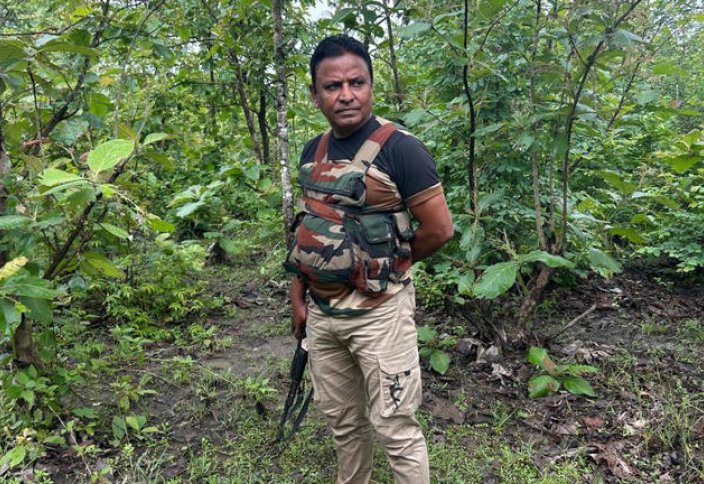
Earlier this month, DW reporters followed the Special Task Force, known as the District Reserve Guards (DRG), on a patrol in the Bastar region. The operation was led by DRG sub-inspector Sanjay Paul. Their mission: to track down Maoists operating in the area.
For Sanjay, carrying out operations in these jungles is complex and risky. He tells us the dense forests are the perfect hiding place for Naxal fighters to carry out ambushes.
"The Naxal ideology poses a huge threat to us and to our country, we will not sleep till we finish it," Sanjay told DW.
His words echo the stance of New Delhi. In February 2025, Indian Interior Minister Amit Shah lauded the security forces for successful operations and set a deadline for eliminating the Naxal movement.
"I reassure the nation that by March 31, 2026, India will surely be Naxal-free," he said.

Человеческие жертвы
As the heavy-handed approach tightens its grip on Bastar's forest villages, locals are left mourning their dead.
Many told DW that the line between Naxal fighters and villagers has blurred. They accuse security forces of carrying out indiscriminate killings.
Iytu Oyam, a bereaved father, from Komhu village in Narayanpur district, travelled to Bodga to meet us. He claimed that his son, Moto Oyam, was killed in a "fake encounter" by security forces last May while he was working on his farm.
"I want to tell the world that my son was innocent. He was not a Naxal. What was his crime that he was killed?" he told DW.
Activists and human rights lawyers have alleged that counter-insurgency operations have turned Bastar into a war zone where Adivasi communities, which make up most of the local population, live in constant fear from both sides.
They claim there is a pattern of extrajudicial killings, often called "encounter killings," where police allegedly stage civilian deaths to look like combat fatalities.
Регион на перепутье
Reports by groups such as Human Rights Watch have also documented arbitrary detentions, forced displacement, and sexual violence by security forces.
"They have turned Bastar region into a graveyard, where almost every family has a story of human loss," according to lawyer Bela Bhatia, who is supporting Adivasi people in their claims against the state.
When we confronted DRG officer Sanjay Paul with these allegations, the police officer denied any deliberate targeting of civilians.
"Sometimes it happens by mistake. During crossfires, civilians can die. But we do not kill civilians intentionally," he told DW.
Decades of Maoist insurgency, Naxal violence, and state crackdowns have left nearly 12,000 people dead — including civilians, militants and security personnel, according to the latest figures from watchdog South Asia Terrorism Portal.
For Sukli Oyam, sitting with her son's photograph, justice feels like a distant dream.
"My son is gone," she said quietly. "The police didn't protect us. The Naxals who claim to fight for our rights didn't help us. We are just stuck in between."
Ричард Куджур и Раунак Шивхаре подготовили репортаж из Бастара, Чхаттисгарх
Редактор: Кит Уокер
Author: Adil Bhat (in Bastar, Chhattisgarh)