

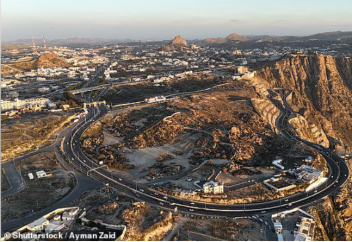




|
Китай начинает работу над крупнейшей в мире плотиной, которая, по словам Индии, может быть использована для ведения гидровойны
|
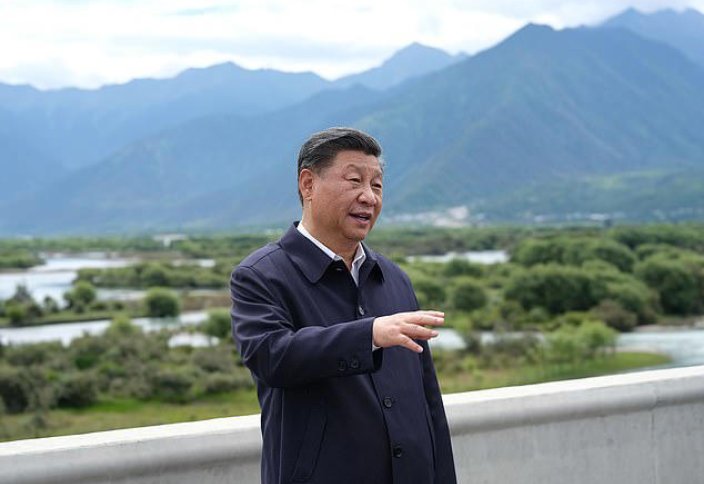
Китай начал строительство гигантской плотины, которая будет производить достаточно электроэнергии каждый год для обеспечения энергией Великобритании, но соседи Индия и Бангладеш предупреждают, что она может быть использована для ведения гидровойны.
Премьер-министр Китая Ли Цян официально объявил о начале строительства гидроэлектростанции Мотуо на церемонии в отдаленной тибетской деревне, назвав его «проектом века».
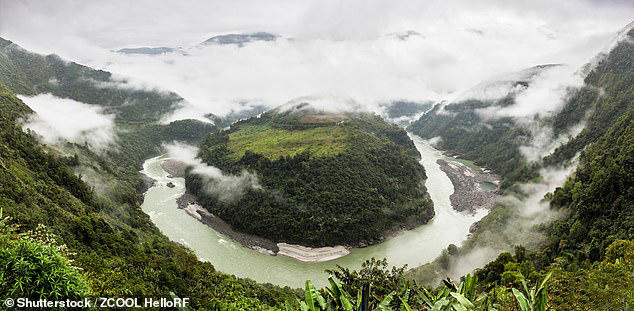
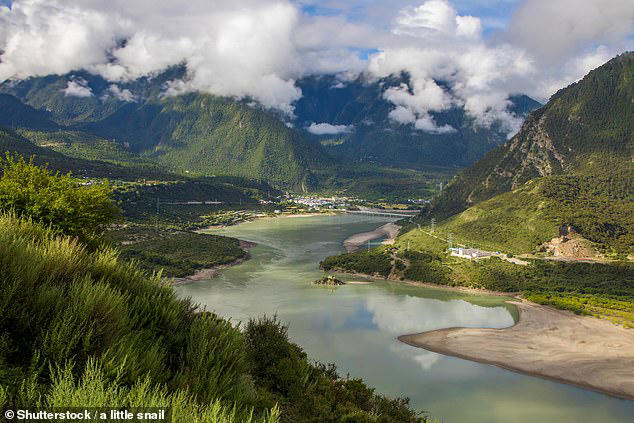
Пять каскадных гидроэлектростанций будут установлены вдоль излучины реки Ярлунг Зангпо, которая огибает гору Намчабарва, с туннелями, пробуренными в скале, чтобы нагнетать воду в турбины.
Пекин заявляет, что плотина, стоимость которой составит около 1,2 триллиона юаней или 124 миллиарда фунтов стерлингов, будет производить 300 миллиардов киловатт-часов электроэнергии, что более чем в три раза превышает мощность плотины «Три ущелья» в Янцзы в центральном Китае, которая в настоящее время является крупнейшей в мире.
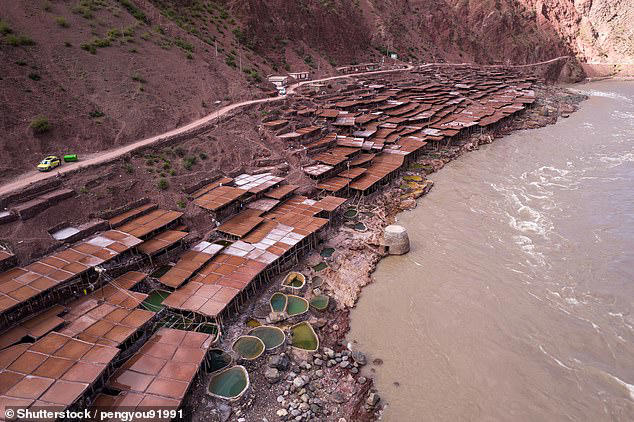
Но река Ярлунг Зангпо течет в индийские штаты Аруначал-Прадеш и Амман, а затем в Бангладеш, образуя реки Сианг, Брахмапутра и Джамуна.
Эти водные пути являются источником жизненной силы цивилизации в одном из самых плодородных и густонаселенных регионов мира.
Индийские и бангладешские официальные лица бьют тревогу, утверждая, что новая плотина фактически даст Китаю право контролировать и ограничивать поток воды через границу или вызовет разрушительные наводнения.
Главный министр штата Аруначал-Прадеш Пема Канду сообщил информационному агентству PTI, что реки Сианг и Брахмапутра могут «значительно высохнуть» после завершения строительства плотины, и назвал проект «экзистенциальной угрозой нашим средствам к существованию».
«Проблема в том, что Китаю нельзя доверять. Никто не знает, что они могут сделать», — сказал он, предупредив, что Пекин может использовать плотину для создания «водяной бомбы» во время войны.
«Предположим, что плотина будет построена, и они внезапно сбросят воду, весь наш пояс Сианг будет разрушен... (общины) увидят, как вся их собственность, земля и особенно человеческая жизнь пострадают от разрушительных последствий».

Shares in China Energy Engineering, the lead contractor for the project, leapt 51% following the opening ceremony yesterday, with Power China and Huaxin Cement also enjoying notable boosts.
China's foreign ministry says the dam will be instrumental in achieving Beijing's net zero by 2060 goal.
It previously dismissed complaints from Indian authorities as early as 2017 over rising pollution in the Siang river as a result of earlier construction projects, and has asserted that Beijing has a 'legitimate right' to dam the Yarlung Zangpo.
The ministry added that China never 'pursues benefits for itself at the expense of its neighbours. China will continue to maintain current exchange channels with downstream nations and step up cooperation on disaster prevention and mitigation.'
But Indian officials are not convinced. New Delhi lodged a formal complaint with China in 2024, while Arunachal Pradesh Chief Minister Khandu announced that politicians are already working to put defensive measures in place.
He told PTI that the state government has conceived a project called the Siang Upper Multipurpose Project - a dam that will act as a buffer to avert flooding in the event that China releases huge quantities of water upstream.
'I believe China is either about to start or has already started work on their side. But they do not share any information.
'Who will make China understand? Since we cannot make China see reason, it is better that we focus on our own defence mechanisms and preparations. That is what we are fully engaged in at the moment,' he said.
Neither China nor India is a signatory to the Water Convention, a UN treaty which provides a legal and regulatory framework for the protection and management of transboundary surface waters and groundwaters.
This means Beijing is not bound to monitor water levels and is not responsible for ensuring that downstream rivers are provided with enough water to maintain its economic activity, agriculture and aquatic life.
India accounts for roughly 17 per cent of the global population but has access to just 4 per cent of its fresh water resources, according to data published by the Stockholm International Water Institute and the World Bank.
Australia's Lowy Institute in 2020 reported that Beijing's 'control over these rivers [in the Tibetan Plateau] effectively gives China a chokehold on India's economy', while the Parley Policy Initiative's special adviser for South Asia, Neeraj Singh Manhas, told a BBC podcast in January that China 'can always weaponise this water in terms of blocking it or diverting it'.
A reliable water supply is also vital for India's plans to rapidly expand its coal power plants in the coming years as the world's most populous nation looks to develop its industry.
'Water wars are a key component of warfare... (these dams) allow China to leverage its upstream Tibet-centred power over the most essential natural resource,' political scientist Brahma Chellaney wrote in the Times of India.
Chellaney, a professor of strategic studies at the Centre for Policy Research in New Delhi, also pointed out that the Tibetan Plateau, through which the Yarlung Zangpo river flows, experiences high levels of seismic activity.
Damming the river could increase the risk of natural disasters, creating a 'ticking water bomb', he said.
New Delhi's protest at China's construction project comes just months after India also threatened to demonstrate the strategic power of water as a weapon of war.
In the wake of the Pahalgam terror attack in April that sparked a brief armed conflict between India and Pakistan, New Delhi suspended its participation in the Indus Waters Treaty, which obliges India to allow water to flow into Pakistan from the Indus River - a lifeline for Pakistan's agriculture and economy.
Dr Manali Kumar, an expert in Indian foreign policy at the University of St. Gallen, told MailOnline the move carried 'immense risks' and was perceived by Pakistan as an 'existential threat'.
'This also sets a dangerous precedent for the weaponisation of shared resources, raising alarms among India's other neighbours who will be watching how this develops very carefully,' Dr Kumar warned.
China's new dam and India's suspension of the Indus Water Treaty are just the latest examples of the myriad ways in which controlling the flow of the world's most vital resource can be used as an instrument of leverage in foreign policy, or a tool of war.
The Pacific Institute reported global water-related violence surged by more than 50 per cent in 2023 alone, as states and non-state actors alike realise the leverage water offers.
Despite this, international institutions still largely view water as a development or environmental issue rather than a national security flashpoint, and there is no robust legal framework that clearly classifies the manipulation of water flows to coerce nations or harm civilians as a war crime.
Advocates argue that the deliberate weaponisation of water must carry real consequences - from international sanctions to legal prosecutions and reparations - to prevent it from becoming a mechanism of modern conflicts.
In the meantime, previous Chinese megadam construction projects have proven devastating for local populations and aquatic biodiversity.
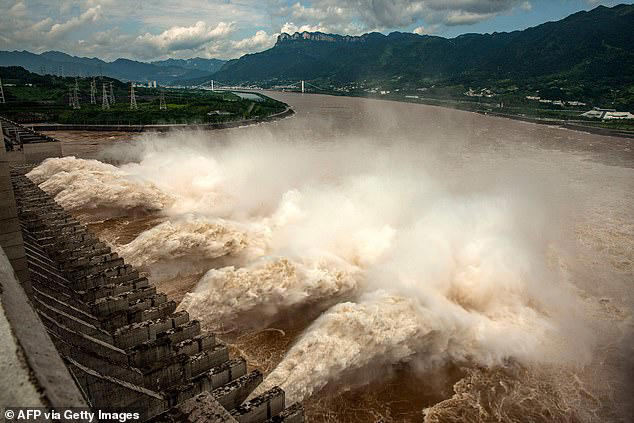
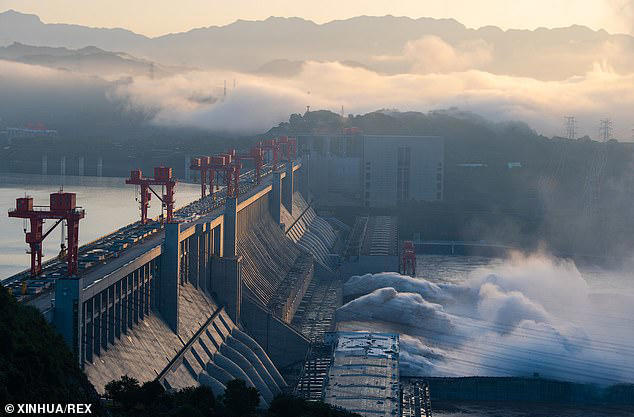
The Three Gorges Dam, finished in 2012 on the Yangtze River, created a huge man-made reservoir and displaced 1.4 million inhabitants upstream.
Tempa Gyaltsen Zamlha, an environmental policy specialist at the Tibet Policy Institute, a think tank linked to the Tibetan government-in-exile based in Dharamshala, India, said the same consequences would be felt around Yarlung Zangpo.
'We have a very rich Tibetan cultural heritage in those areas, and any dam construction would cause ecological destruction, submergence of parts of that region.
'Many local residents would be forced to leave their ancestral homes,' he said, adding that the project will encourage migration of Han Chinese workers that 'gradually becomes a permanent settlement'.
'Building a dam the size of the super-dam is likely a really bad idea for many reasons,' said Brian Eyler, energy, water and sustainability program director at the Stimson Center, a US think tank.
The dam would block the migration of fish as well as sediment flow that enriches the soil during seasonal floods downstream, said Eyler.