

|
Хай-тек хадж: больше безопасности, но меньше приватности, духовности?
|
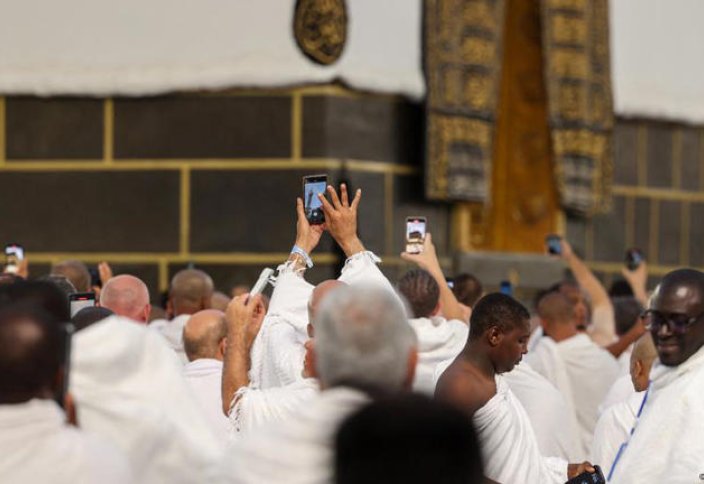
Власти Саудовской Аравии будут использовать беспилотные летательные аппараты, искусственный интеллект и другие технологии для обеспечения безопасности во время паломничества в хадж в этом году. Но это увеличивает другие риски — для конфиденциальности данных, хакеров и превращения духовного путешествия в «киберопыт».
В этом году это дроны с тепловизионным изображением и роботы, раздающие религиозные советы. Десять лет назад все было связано с чудом мобильного телефона. А столетие назад этот автомобиль был самым высоким уровнем высоких технологий, используемых во время ежегодного паломничества в хадж.
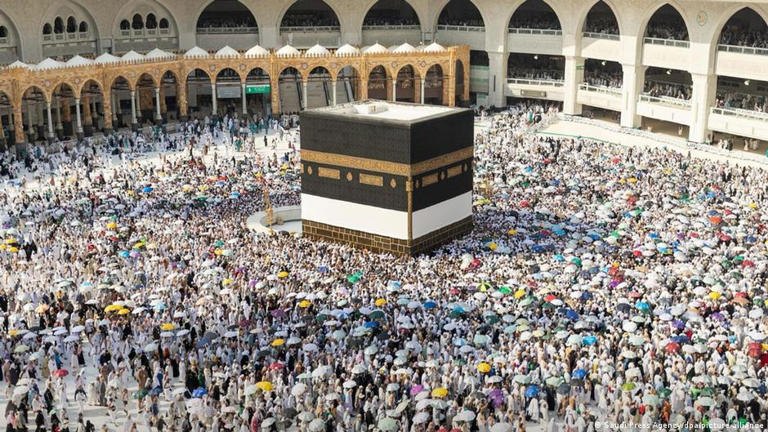
Хадж, одно из крупнейших собраний людей на Земле, предназначен для того, чтобы каждый взрослый мусульманин совершил его один раз в жизни. Он начнется в Саудовской Аравии 4 июня и завершится 9 июня. В эти дни до 2 миллионов паломников из более чем 180 стран примут участие в ряде различных религиозных церемоний в Мекке.
Но наличие такого большого количества людей, перемещающихся на одной сравнительно небольшой территории, приводило к проблемам в прошлом. Тысячи паломников были убиты в толпе в 1990 и 2015 годах. В прошлом году более 1 300 человек погибли из-за экстремальной жары; паломники часто проходят до 65 километров в день при жаре от 40 до 50 градусов по Цельсию. Во время хаджа также были пожары, протесты, самоубийства, разрушения зданий и инфекционные заболевания, а также более повседневные проблемы, такие как потерявшиеся люди или проблемы со здоровьем.

Поэтому неудивительно, что власти Саудовской Аравии пытаются использовать технологии для улучшения контроля толпы и обслуживания своих посетителей. В этом году Саудовская Аравия будет использовать беспилотные летательные аппараты с тепловизионным изображением, а также искусственный интеллект и технологию распознавания лиц, чтобы гарантировать, что въезд будет разрешен только тем, у кого есть разрешение на хадж.
В прошлом году многие смерти были в основном среди паломников, у которых не было официального разрешения на пребывание там, и поэтому они не могли получить доступ к таким услугам, как укрытие с кондиционером в сильную жару.
Могут ли высокие технологии повысить безопасность?
To avoid overcrowding, Saudi Arabia's Nusuk website, also a mobile phone application, allows attendees to register to enter certain areas at allotted times. The Nusuk system includes an electronic identity card and a smart wristband, which hold information on the user's identity, travel plans, finances, health and accommodation, among other things. The Nusuk card must be carried throughout the pilgrimage and is used to access transport and other services. Some of the wristbands have location tracking, monitor the wearer's blood oxygen levels and heart rate, and can even be used to call for medical help.
Other technological advances at this year's Hajj include robots to guide visitors around religious sites and to hand out water, Korans or offer advice in 11 languages. There are also newly paved, more reflective (and therefore cooler) streets, paths that minimize vibration for walking comfort, and a special white pilgrim's gown made from futuristic fabric that keeps the wearer up to 2 degrees Celsius cooler.
All the technology, surveillance and advanced algorithmic calculation is meant to make the event safer and the chance of tragic accidents less likely. But as the amount of technology grows, so too do concerns about data privacy, state surveillance and potential cybercrime.
"All of these technologies are mandatory and those who refuse them are not allowed to perform the pilgrimage," explains Zeinab Ismail, a researcher and editor at the Lebanon-based digital rights organization, SMEX. "All of this, combined with Saudi Arabia's personal data protection law, which only partially aligns with international standards and contains concerning provisions and loopholes, raises increasing concerns about the safety and privacy of pilgrims' data."
Saudi officials have argued that privacy concerns must outweigh safety at such a huge event.
"Regardless of the [Saudi government's] justification, what worries me the most — and irrespective of the technology itself — is the fact that this technology is being deployed in a country where rule of law is weak, there's no transparency and no [state] accountability," argues Marwa Fatafta, policy director for the Middle East and North Africa at international digital rights organization, Access Now.
It would be difficult to audit the technologies for problems and even harder for individuals to question their use, Fatafta told DW.
"For the people who are going to the Hajj pilgrimage, they're not in any position to push back and say, 'I don't want to give my biometric data'," she continued. "So just the general context means that the door is wide open for abuse."
«Свяжитесь с нами»?
Reading the Nusuk app's terms and conditions, information about how long pilgrims' personal data can be kept is vague and even contradictory. DW e-mailed Saudi Arabia's National Data Management Office and the supervising Saudi Data and AI Authority to ask for more information on this. Both organizations publish e-mail addresses for the public to use if they have questions or want to make a complaint.
Two DW e-mails received no response. Another bounced back with the message: "Recipient's mailbox is full."
Since 2023, Saudi Arabia has had a personal data protection law — but as Ismail pointed out, "the current legal framework … allows legislation to be interpreted or manipulated in ways that may serve state interests over human rights."
It's not just potential misuse of millions of pilgrims' data by local authorities causing concern. Higher dependence on technology to monitor and control Hajj pilgrims also means more vulnerability in general, as there are more places for hackers to attack. And Saudi Arabia and other Gulf states are already some of the biggest victims of cybercrime.
The first platform Saudi Arabia used for registering pilgrims, Motawif, was run by a private company and unexpectedly sent spam to users. The state-run Nusuk app replaced it in 2022. The following year, cybersecurity experts found data submitted to Nusuk for sale on illicit websites that deal in stolen personal data.
Меньше религии, больше киберпространства
New technology has also brought another worry: Is all that high tech taking away from the once-in-a-lifetime spiritual relevance of the Hajj?
A 2018 study conducted by researchers at the University of Central Lancashire in the UK suggested it might be.
Pilgrims interviewed for the study complained about others taking selfies at holy sites, talking on the phone while performing rituals and behaving like tourists rather than pious visitors. "Smartphones are the fourth devil in Hajj," one interviewee said, referring to a ritual featuring three representations of the devil.

Some even complained all the technology was making the journey too easy.
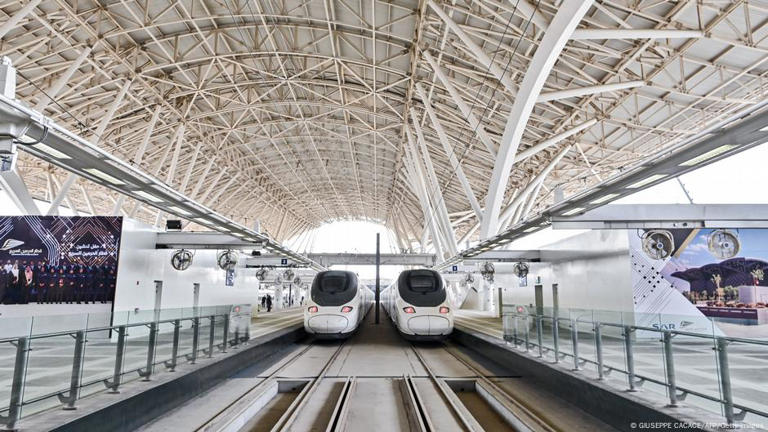
Where once pilgrims walked between holy sites, now they ride a high-speed train. And where once they stayed in simple tents, now they're accommodated in 10,000 air-conditioned, fire-resistant tents.
"Since the Hajj has become 'high-tech,' the fundamental spirituality of the pilgrim's experience is arguably being transformed into something more akin to a 'cyber experience'," the UK researchers wrote. Traditionally the Hajj is meant to be all about simplicity, spiritual purity and contemplative worship, they explained.
As with every other kind of digital technology, high tech at the Hajj had its benefits and disadvantages, they concluded.
Редактор: Джесс Сми
Author: Cathrin Schaer
Более миллиона паломников начинают хадж под палящим солнцем
Более миллиона паломников присоединились к самому важному обряду ислама под палящим солнцем в среду, когда хадж начался с того, что саудовские хозяева изо всех сил пытались избежать более 1000 смертей в прошлом году в изнуряющей жаре.
С температурой, которая, как ожидается, превысит 40 градусов по Цельсию (104 градуса по Фаренгейту), паломники в мантиях медленно обогнули Каабу — черный куб в самом сердце Большой мечети Мекки, которая является самым святым местом ислама.
Государственные СМИ сообщили, что другие начали прибывать в обширный палаточный городок Мина на окраине Мекки, где они останутся на ночь перед кульминацией хаджа в четверг — молитвой на горе Арафат, где, как полагают, пророк Мухаммед произнес свою последнюю проповедь.
Около 1,4 миллиона паломников прибыли в Саудовскую Аравию в преддверии хаджа, одного из пяти столпов ислама, который должен быть совершен хотя бы один раз всеми мусульманами с помощью средств.
Власти усилили меры защиты от жары, такие как дополнительная тень, чтобы избежать повторения прошлого года, когда 1301 человек погиб, когда температура достигла 51,8 ° C (125,2 ° F).
В среду паломники совершат таваф — семикратное хождение вокруг Каабы, о котором мусульмане молятся каждый день.
Прежде чем войти в Мекку, паломники должны сначала войти в состояние чистоты, называемое ихрам, которое требует особой одежды и поведения.
Мужчины надевают бесшовную белую одежду, похожую на саван, которая подчеркивает единство верующих, независимо от их социального статуса или национальности.
Женщины, в свою очередь, носят свободные платья, также белого цвета, обнажая только лицо и руки.
Паломники, прибывающие на автобусах, уже начали прибывать в Мину во вторник днем, их приветствовал персонал, предлагающий им кофе и финики.
«Я так счастлива, это такое удивительное чувство», — сказала Рим аль-Шогре, 35-летняя жительница Саудовской Аравии, впервые совершающая паломничество.
–Искусственный интеллект–
После прошлогодней смертельной жары власти мобилизовали более 40 государственных учреждений и 250 000 чиновников для улучшения защиты.
Shaded areas have been enlarged by 50,000 square metres (12 acres), thousands of additional medics will be on standby and more than 400 cooling units will be deployed, Hajj Minister Tawfiq al-Rabiah told AFP last week.
Artificial intelligence technology will help process the deluge of data, including video from a new fleet of drones, to better manage the massive crowds.
Authorities said most of the deaths last year were among unregistered pilgrims who lacked access to air-conditioned tents and buses.
This year, they have cracked down on the unregistered, using frequent raids, drone surveillance and a barrage of text alerts.
Hajj permits are allocated to countries on a quota basis and distributed to individuals by lottery.
But even for those who can obtain them, the steep costs prompt many to attempt the hajj without a permit, even though they risk arrest and deportation if caught.
Large crowds at the hajj have proved hazardous in the past, most notably in 2015 when a stampede during the “stoning the devil” ritual in Mina killed up to 2,300 people in the deadliest hajj disaster.
Saudi Arabia earns billions of dollars a year from the hajj, and the lesser pilgrimage known as umrah, undertaken at other times of the year.
Hespress
Мусульманские паломники молятся, наслаждаются солнцем, когда хадж достигает пика
Мусульманские верующие молились на горе Арафат во время кульминации хаджа в четверг, поскольку власти призвали их избегать самых жарких часов дня после трагедии, произошедшей в прошлом году.
Тысячи паломников в белых одеждах читали стихи Корана с рассвета на 70-метровом скалистом подъеме недалеко от Мекки, где, как полагают, пророк Мухаммед произнес свою последнюю проповедь.
Но к полудню их число сократилось после официальных предупреждений паломникам оставаться дома с 10:00 утра до 4:00 вечера, через год после того, как 1301 человек умер при температуре, которая достигла 51,8 градуса по Цельсию (125 градусов по Фаренгейту).
«Я приехал сюда рано, чтобы избежать солнца, а позже буду молиться в своей палатке», - сказал 54-летний Адель Исмаил из Сирии.
Власти Саудовской Аравии предприняли ряд шагов для снижения риска от жары во время хаджа, который привлек более 1,6 миллиона паломников в один из самых жарких регионов мира, согласно свежим данным, опубликованным в четверг.
Затененные зоны были расширены на 50 000 квадратных метров (12 акров), еще тысячи медиков находятся в режиме ожидания, и было развернуто более 400 холодильных установок, сообщил министр хаджа AFP на прошлой неделе.
Саудовская Аравия также расправилась с незарегистрированными, не платящими пошлину паломниками, которые не имеют доступа ко всем удобствам и составили более 80 процентов смертей в прошлом году.
В четверг людям, идущим к горе Арафат, были вручены пакеты со льдом, некоторые из них надели маленькие пакеты на головы.
Когда температура достигала 42 ° C (107,6 ° F), чиновники выгоняли людей, если они проводили слишком много времени в одном месте возле холма с валунами, у подножия которого были вентиляторы, распыляющие туман и прохладный воздух.
– «Я не думаю о солнце» –
Поздно вечером в четверг паломники начали свой путь в Муздалифу, на полпути между Арафатом и обширным палаточным городком Мина, где они будут собирать камешки для символического пятничного «побивания камнями дьявола».
Despite the heat, they were generally delighted to be performing the hajj, one of the five pillars of Islam that must be completed at least once by all Muslims with the means.
“I don’t think about the sun or the temperature or anything like that,” said Ahmed, a 44-year-old from Egypt.
“Because standing in Arafat is a great thing and a beautiful day, and as you can see, all the pilgrims” are doing it.
Ali, 33, from Pakistan, said he felt “blessed” to take part.
“This is something that I used to see every year on the TV screen during hajj and I always thought: ‘I wish I could be here’,” he said.
Through tears of joy, Iman Abdel Khaleq said she had wanted to perform the hajj for 10 years and was overwhelmed with emotion as she arrived at Arafat.
“It’s a big dream for me that I had almost given up hope of realising,” the Egyptian woman in her 50s told AFP from the foot of the mount.
— Хай-тек хадж —
Saudi officials said the heat-mitigation measures implemented this hajj had largely been successful in preventing a repeat of last year.
“We are encountering a limited number of heat related illnesses cases this year and this is evidence of the effectiveness of all the organisation measures as well as preventive measures,” said Mohammed Al-Abd Al-Aali, Saudi Arabia’s assistant minister of health.
Along with the anti-heat measures and thousands of extra personnel, Saudi Arabia is also using an arsenal of high-tech tools to help better manage crowds.
More than 15,000 cameras run through artificial intelligence software are monitoring the holy sites and walkways during an event that has a history of deadly stampedes.
This year, officials have also clamped down hard on unregistered pilgrims looking to sneak into Mecca, using raids, drone surveillance and a barrage of text alerts.
Late Thursday, a hajj ministry source said the moves had helped stave off overcrowding at the holy sites so far.
Hajj permits are allocated to countries on a quota basis and distributed to individuals by a lottery.
But even for those who can obtain them, the steep costs prompt many to attempt the hajj without a permit, even though they risk arrest and deportation if caught.
Saudi Arabia earns billions of dollars a year from the hajj, and the lesser pilgrimage known as umrah, undertaken at other times of the year.
The post Muslim pilgrims pray, shirk sun, as hajj reaches peak appeared first on HESPRESS English - Morocco News.