


|
Будущее Ирана после Хаменеи: сможет ли политическая система выжить без него?
|
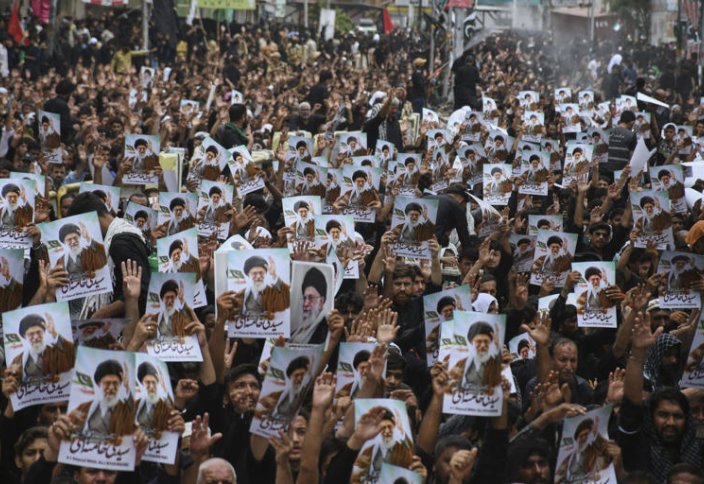
Аятолла Али Хаменеи является верховным лидером Исламской Республики на протяжении 36 лет. Как лидер революции, он отвечает за 90 миллионов иранцев и является иконой для многих, поскольку большинство людей в стране никогда не знали другого главы государства. Последнее слово практически во всех вопросах остается за верховным лидером. Если Хаменеи добьется своего, то это останется так, даже после его смерти. Действительно, самая важная цель 86-летнего президента состоит в том, чтобы политическая система Исламской Республики – с верховным лидером во главе – продолжала существовать после того, как он сам уйдет.
Но сможет ли иранская система пережить смерть своего верховного лидера? Во время 12-дневной войны против Ирана в июне премьер-министр Израиля Биньямин Нетаньяху выразил убеждение, что смерть Хаменеи станет катализатором смены режима. Однако эксперты по региону сомневаются, что смерть верховного лидера автоматически приведет к иному политическому строю.
«Мы не знаем, что произойдет после Хаменеи», — говорит Вальтер Пош, эксперт по Ближнему Востоку в австрийской Академии национальной обороны. Согласно сообщению в New York Times, Хаменеи предложил трех кандидатов на пост его преемника, если его убьют. Однако, судя по всему, только так называемая Ассамблея экспертов знает, кто эти три кандидата. Этот орган состоит исключительно из духовенства и отвечает за избрание верховного лидера. Неясно, произойдет ли смена власти организованным образом и будет ли преемник Хаменеи иметь такую же власть, как он.
Когда в июне 1989 года Хаменеи был избран преемником великого аятоллы Рухоллы Хомейни, основателя Исламской Республики, он считался относительно слабым компромиссным кандидатом, которому не хватало как личной харизмы, так и религиозного авторитета его предшественника. Однако, заполнив ключевые посты в Исламской Республике надежными союзниками, Хаменеи удалось укрепить свою власть. «Глава государства правит почти как в вильгельмовской Германии», — объясняет эксперт по Ближнему Востоку Пош, имея в виду период между 1888 и 1918 годами, когда Германией правил кайзер Вильгельм II. «Есть конституция и парламент, но и верховный лидер может многое решать сам. Однако, когда речь идет о ключевых институциях, это не так очевидно на поверхности».
As the supreme leader, Khamenei sets the general guidelines for policy and controls the judiciary, the regular army and the Revolutionary Guards, the police and intelligence services, state media, and organizations and religious foundations that administer part of the national economy. Nevertheless, Khamenei is not all-powerful, as he must take into account the positions and interests of other centers of power. Without the support of the powerful Revolutionary Guards, for example, he would hardly have been able to remain in power for so many years.
The Revolutionary Guards were established after the 1979 revolution as a kind of shadow army to keep the regular armed forces in check and minimize the risk of a coup. Although the force numbers only around 150,000 members, just over a third the size of the regular armed forces, it is significantly better funded than its rivals, and its weapons are also more modern than those of the army.
Иран поддерживает союзных ополченцев за рубежом
After the costly war against Iraq from 1980 to 1988, Khamenei pursued a doctrine of keeping any future war off Iranian soil. To this end, the Revolutionary Guards built up an empire of allied militias abroad. This so-called «Axis of Resistance» includes Hamas in the Gaza Strip and Hezbollah in Lebanon, among others.
In order to secure the loyalty of the Revolutionary Guards, they have been granted more and more privileges under Khamenei's rule. This includes permission to engage in otherwise illegal trade and lucrative government contracts, but also exemptions from taxes and customs duties. This has enabled them to enrich themselves at the expense of the state and build up a sprawling economic empire. Banks, restaurant chains, hotels and telecommunications companies have long been under the control of the Revolutionary Guards.

However, when Israeli forces launched an airstrike against Iran in June, neither the Revolutionary Guards nor the regular army were able to counter the bombardment. For 12 days, Israel targeted Iranian military installations and nuclear scientists. The Iranian armed forces were unable to prevent their archenemy from doing so. Israel's success in infiltrating the Iranian power apparatus could also have something to do with the changing role of the Revolutionary Guards, as they now appear to be primarily motivated by their own financial interests rather than Islamic ideology. Experts suspect that some of them were bought off by Israel.
The fact that Khamenei has now appointed a major general in the regular army, Abdul Rahim Mousavi, as the new chief of staff of the Iranian Armed Forces could indicate a shift in power in favor of the regular armed forces. In this role, Mousavi commands not only the army but also the Revolutionary Guards. His predecessor, Gen. Mohammad Bagheri, an officer in the Revolutionary Guard, had previously been killed in Israeli airstrikes.
Ограниченное влияние рядовых иранцев
Almost five decades after its founding, the Islamic Republic is increasingly evolving into a military dictatorship. Its religious character is playing an increasingly minor role. And the will of the people is also largely being ignored. According to Middle East expert Posch, the Islamic Consultative Assembly, as the parliament is called, is not entirely meaningless. It enables members of parliament to represent the interests of their constituents in their respective regions or to question ministers who have to push their government's agenda through parliament. But even the elected institutions in Iran represent only part of the electorate.
Voter turnout is a barometer of trust in the system, Posch explains, and those who do not accept the system do not cast ballots. According to official figures, voter turnout in the last parliamentary election, in March 2024, was around 41%, the lowest ever recorded. After failed attempts at reform in recent decades, many Iranians have stayed away from the polls – apparently in protest against the ruling class.
Even for the presidential election a few months later, relatively few people turned out to vote. Only 40% of eligible voters participated in the first round in June 2024. In the runoff election a week later, 50% of them came to the polls – and the majority of them voted for the moderate candidate, Masoud Pezeshkian. During the election campaign, he had indicated that he was open to social reforms, such as abolishing the requirement for women to wear a hijab, or headscarf, in public. However, the president's influence has clear limits, as only candidates who are loyal to the system are allowed to stand for election in the first place.
Вооруженные силы расширили свою мощь
Many people in Iran want a different political system. This was evident in the numerous demonstrations against strict dress codes, the dire economic situation, and police violence – for example, following the violent death of 22-year-old Kurdish woman Mahsa Amini in September 2022. Under the slogan «Woman, Life, Freedom,» Iranian women in particular have attracted worldwide attention.
However, as long as the army and the Revolutionary Guards benefit from entrenched power structures, it is unlikely that they will voluntarily relinquish their influence and privileges. As part of a state with Islamic legitimacy and leadership, the Iranian system may be heading toward its end. However, under Khamenei, the army and the Revolutionary Guards have gained so much power that they could control the state even after Khamenei's death. It is to be expected that these two centers of power, in particular, will assert and expand their influence when a successor to the revolutionary leader is appointed.