



|
Африка: как прекращение действия AGOA может открыть новые возможности для торговли
|
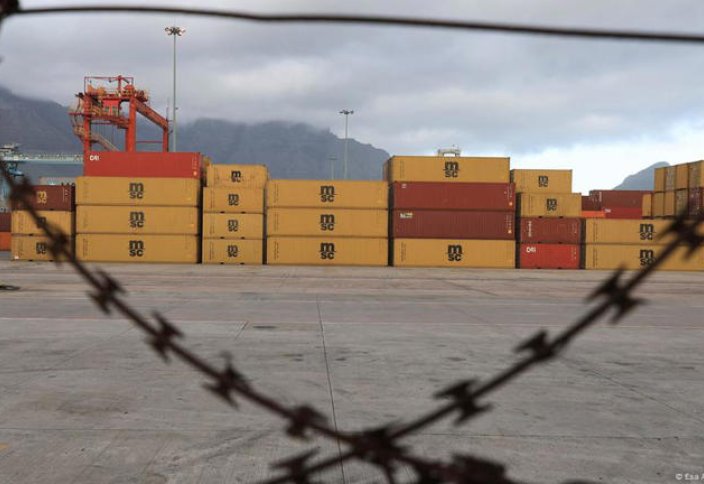
Торговое соглашение AGOA между Соединенными Штатами и африканскими странами подходит к концу. Бесчисленное количество работников вынуждены бояться за свои рабочие места. Но есть и возможность для развития новых торговых партнерств.
Торговое соглашение между Соединенными Штатами и странами Африки к югу от Сахары, известное как AGOA (Закон о росте и возможностях в Африке), истекает 30 сентября.
Хотя некоторые все еще надеются на последнюю отчаянную попытку заключить последующее соглашение, десятки африканских стран готовятся к концу 25-летнего беспошлинного доступа на рынок США — по крайней мере, на данный момент.
«Исследования показывают, что AGOA оказал положительное влияние. Экспорт в США увеличился, например, в текстильной промышленности», — говорит Зоряна Олексеюк, которая исследует трансформацию экономических и социальных систем в Немецком институте развития и устойчивого развития (IDOS).
«Например, Лесото может потерять почти 6% от общего объема экспорта, Мадагаскар — более 3%, Ботсвана и Чад — около 2%», — говорит эксперт IDOS Олексеюк.
Олексеюк также подчеркнул, что, учитывая все обстоятельства, уровень успеха AGOA немного неоднозначен, подчеркнув, что «общий эффект для региона ограничен, и влияние варьируется от страны к стране и от сектора к сектору».
AGOA: Влияние на Африку лишь в некоторых случаях незначительно
Это торговое партнерство, начатое в 2000 году при президенте США Билле Клинтоне, было призвано приблизить Африку к самой сильной экономике мира.
Однако возвращение Дональда Трампа в Белый дом в 2025 году, которое привело к возобновлению протекционистской политики, привело к тому, что тарифы снова выросли, фактически расторгнув сделку.
В общей сложности 35 африканских стран были частью соглашения, которое облегчило доступ к американскому рынку: почти 7000 продуктов могут быть беспошлинно перевезены через Атлантику в соответствии с соглашением.
Это помогло развиваться и процветать целым секторам — текстильной, сельскохозяйственной и сырьевой, и это лишь некоторые из основных отраслей, получивших выгоду от соглашения на протяжении многих лет.
Это, в свою очередь, привело к массовому созданию рабочих мест, особенно на Мадагаскаре, в Лесото и Южной Африке.

Надвигающаяся угроза сокращения рабочих мест
But now, a quarter century of achievements and growth might be lost overnight.
Malick Sane, a specialist in international trade at Cheikh Anta Diop University in Dakar, told DW that African companies "will have great difficulty in continuing to penetrate the American market with competitive products," leading a decline in production output — and therefore jobs.
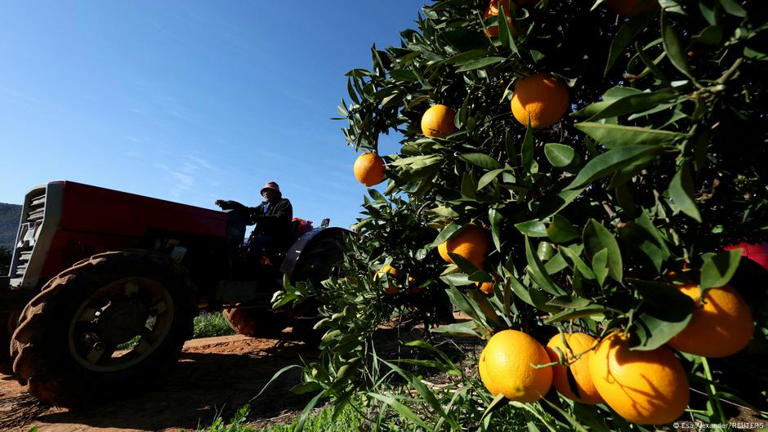
South Africa, the largest African exporter to the United States, faces a projected loss of more than 35,000 jobs in the citrus fruit sector alone, while Madagascar will have to pay a 47% tax on vanilla and textile exports in future.
The US government meanwhile threatened Lesotho, a specialist in the production of jeans materials, with a record tariff of 50% — an announcement that was reduced to 15% in July.
Mauritius meanwhile is to pay 40% on its industrial products. Some of these raw materials are essential for the American industry.
US tariffs will also be levied on exports of platinum, gold, diamonds and rare earths — important sources of income for numerous countries such as South Africa, Ghana, Lesotho, Namibia and Madagascar.

AGOA: громкие разговоры с небольшими преимуществами
However, trade with the USA had already been on the decline in recent years, emphasizes economist Olekseyuk.
"In 2017, only 8.5 percent of exports from AGOA countries went to the USA. That is significantly less than to Europe or China," she stressed, lending hope for a soft landing once the trade agreement expires.
Furthermore, she adds that only few African exporters have actually benefited from AGOA advantages, highlighting tha profit margins "are simply not big enough."
She adds that for the countries that were part of AGOA, the bureaucracy involved in trading with the US often was barely worth the efforts to begin with.
In view of these ongoing economic developments, some countries may therefore not even wish to continue with AGOA while others might seek their own direct deals the US.
Zimbabwe, for instance, decided to lift their own customs barriers in order to calm the situation, while South Africa and Madagascar continue to seek targeted exemptions from the US.
Историческая возможность: может ли Африка освободиться от зависимости?
Malian economist Etienne Fakaba Sissoko regards the end of AGOA as an opportunity for a new begining, as other trading partners continue to gain in importance across the continent.
"The [Arican] countries should use this historic opportunity to free themselves from their dependency. For 25 years, AGOA has been presented as a gift. In reality, it has mainly served the geographical interests of the United States," he told DW.
Fakaba Sissoko adds that "(t)he end [of AGOA] must be taken as an opportunity to move from a logic of aid to a logic of autonomy for our states."
"We need to build an African economic sovereignty that is no longer dependent on the whims of Washington or any other country."
Olekseyuk agrees, stressing that "AGOA was important, but has lost its appeal."
"Its demise shows once again that Africa urgently needs to diversify its trade structures."
Новые партнерства, новые возможности
The African Union (AU) has long been pushing to advance the African Continental Free Trade Area (AfCFTA), which has been in force since 2021, in order to strengthen the continent's economic independence.
The free trade area, which comprises 54 African countries with a population of around 1.55 billion in total, could now become more attractive for companies across the continent than AGOA ever was, according to the assessment trade expert Sane.
However, another trend is emerging at the same time: African trade partnerships with other regionsare also redefining the way that Africa's trade of tomorrow might look.
China, which recently abolished its tariffsfor 33 African countries, is particularly making a name for itself as a substitute partner.
In 2024, African exports to the US under AGOA reached a value of $8 billion, nearly half of which was South African trade; the same year, trade between China and Africa grew by 4.8% to $295 billion, according to figures published by Chinese customs.
Укрепление новых связей
Alongside China, the European Union will also remain an important partner for African economies via the Economic Partnership Agreement (EPA) in the future.
Other countries such as India, Turkey, Brazil and Russia meanwhile are also trying to strengthen their presence on the continent.
For Mamady Kamara, a consultant for governance, development policy and entrepreneurship based in Washington DC, there is no question that Africa must further diversify its partnerships with the end of AGOA.
However, Kamara also warns against replacing old dependencies with new ones: "The challenge for Africa is to negotiate balanced agreements that actually promote local value creation," he told DW.
Редактор: Сертан Сандерсон
Author: Martina Schwikowski, Bob Barry
Тысячи рабочих в подвешенном состоянии из-за истечения срока действия торгового соглашения между США и Африкой
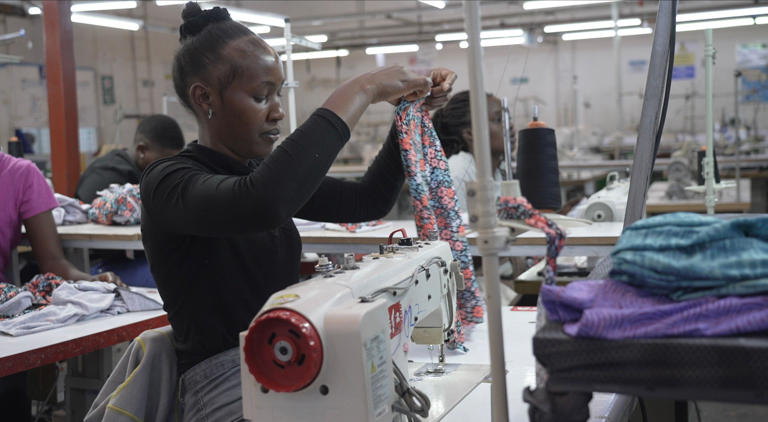
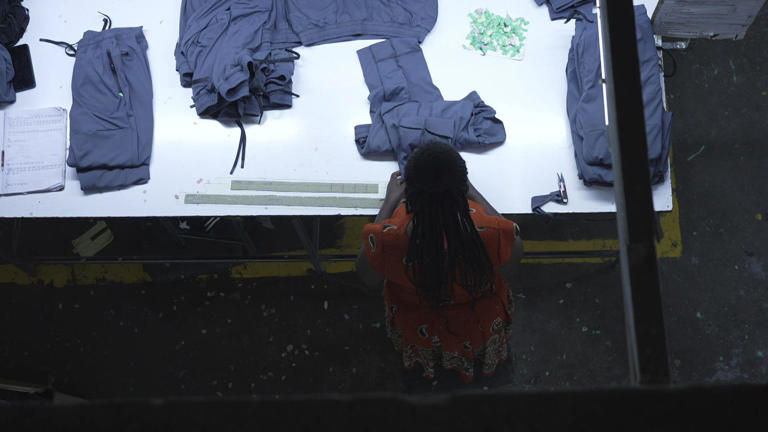
На швейной фабрике Shona EPZ в столице Кении Найроби напряженность неизбежна.
Усердный гул сверхмощных швейных машин вместе с болтовней рабочих обычно наполняет завод успокаивающим ритмом. Но сегодня каждый звук окрашен неопределенностью, поскольку будущее фирмы неопределенно из-за возможного прекращения действия ключевой части торгового законодательства США.
Во вторник истекает срок действия Закона о росте и возможностях в Африке (Agoa), закрепляющего в законодательстве знаковое торговое соглашение, которое в течение 25 лет предоставляло некоторым африканским товарам беспошлинный доступ на рынок США.
Однако эта политика идет вразрез с послужным списком администрации Трампа по введению тарифов.
Посланники из различных африканских стран отправились в США, чтобы попытаться договориться о продлении, но неясно, произойдет ли это.
Считающийся краеугольным камнем американо-африканских экономических отношений, Агоа стремился помочь индустриализации континента, создать рабочие места и вывести десятки стран из нищеты.
В его основе лежала философия замены помощи торговлей.
Агоа оказался очень ценным для таких стран, как Кения и Лесото, и судьба тысяч рабочих, таких как 29-летняя Джоан Вамбуи, связана с его будущим.
Конец сделки может означать конец ее работы.
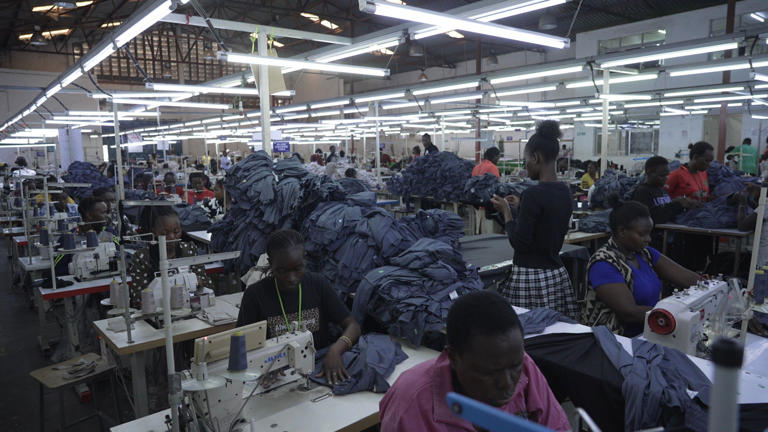
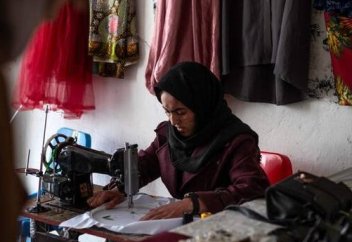
Г-жа Вамбуи работает в Shona EPZ, помогая шить спортивную одежду исключительно для американского рынка, всего полгода. За это короткое время ее зарплата стала основой ее семьи. Она поддерживает свою четырехлетнюю дочь, двух сестер в колледже, а также свою мать.
По ее словам, потеря работы повлияет не только на ее собственную жизнь.
«Если Агоа умрет, куда мы пойдем?» — спрашивает г-жа Вамбуи обеспокоенным тоном, ее руки и ноги двигаются в такт на швейной машинке, пока она сшивает кусочки ткани.
Для нее регулярная заработная плата означала больше, чем просто доход. Это означало достоинство и возможность платить за школьное обучение, держать еду на столе и позволило ей с нетерпением ждать лучшего будущего.
«Это сильно ударит по мне. Начинаем искать новую работу. В Кении трудно найти работу, очень трудно», — говорит она, складывая кусок ткани, который только что сшила.
Kenya's apparel industry has thrived under Agoa.
In 2024 alone, the country exported $470m (£350m) worth of clothing to the US, supporting more than 66,000 direct jobs, three-quarters of them done by women, according to the Kenya Private Sector Alliance, an umbrella group of private businesses.
Factories like Shona EPZ have become important sources of employment, especially for young people who have struggled to find stable work in a tough economy.
"Most of the people here were taken from the streets," Ms Wambui says. "They were drug addicts. If it expires, they might go back there, and here they are reformed."
Shona EPZ does not require new employees to be skilled – the company is committed to training those it gives a job to.
The lack of clarity over the future of Agoa has already had an impact on Shona EPZ's output.
Normally, the factory produces nearly half a million garments each month, but this year output has slumped to about a third, as buyers hold back on long-term orders.

Garment sales from Kenya have also been hit this year by the 10% tariff introduced by the Trump administration earlier this year. A renewal of Agoa would not get rid of that, but would mean no additional tariffs.
"If the extension isn't granted, we may have to send people home and possibly shut down," factory director Isaac Maluki tells the BBC.
"If we can't get enough work to sustain the people here, we will have no choice."
Over the past seven years, Shona EPZ, which employs 700 people, has invested $10m in building the firm.
"If the extension doesn't happen, we are looking at the $10m investment going down the drain," a worried Mr Maluki explains.
The uncertainty stretches far beyond Kenya.
Across Africa, more than 30 countries currently export over 6,000 products to the US under Agoa, ranging from textiles to agricultural goods.
The programme has been credited with creating jobs, boosting industries, and giving African economies a stronger foothold in global trade.
But looking at a future deal, African negotiators need to rethink their approach, according to trade policy expert Teniola Tayo.
"African countries really need to figure out what they want from the US and what they can offer, because you need to be offering something in exchange for market access," she says.
African leaders have been lobbying Washington intensely.
At last week's UN General Assembly, trade was high on the agenda.
Kenya's Trade Minister Lee Kinyanjui revealed that Nairobi was pushing for at least a short extension.
"An ideal situation would be the extension of Agoa so transition mechanisms can be put in place," he said.
At the same time, Kenya is trying to strike its own bilateral deal with the US.
Last week, President William Ruto said he expected to sign a trade deal with the US the end of the year while urging Washington to extend the continent's duty-free access under Agoa for at least five more years.
South African President Cyril Ramaphosa similarly warned that its lapse would carry serious consequences for his country.
At the same time, Kenya and others are looking for new markets to reduce overreliance on the US.
Trade expert Ms Tayo says this should include taking advantage of the African free-trade area.
"When Africans trade amongst themselves, they tend to produce higher-value goods, more manufactured goods versus simply exporting raw materials," she argues.
But this all takes time. For workers like Ms Wambui, the timelines of diplomacy and trade negotiations feel far removed from the daily urgency of feeding a family.
She has just one request for the Kenyan and US governments: give young people more opportunities.
"We have ideas and the drive to make a difference. We just need support to show our potential," she says as she and her colleagues head outside the factory for their lunch break.

Go to BBCAfrica.com for more news from the African continent.
Follow us on Twitter @BBCAfrica, on Facebook at BBC Africa or on Instagram at bbcafrica